


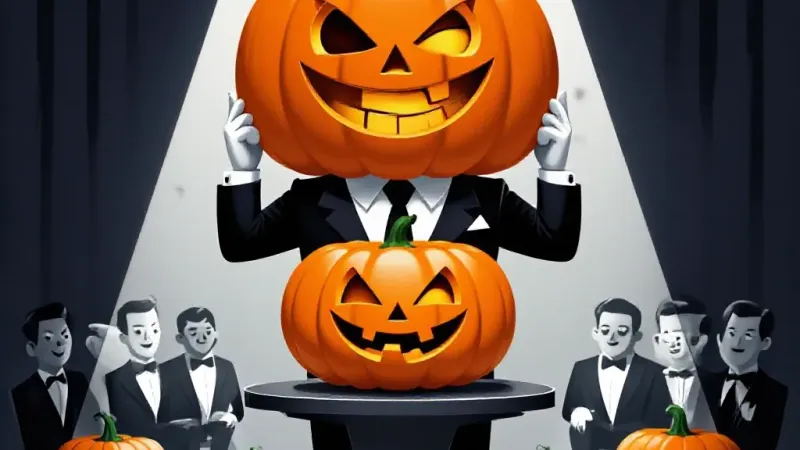
Spirit Halloween's parent company, Tricky Treat Corp., today announced their "Singing Spooky Pumpkin" toy, recently flagged by parents for its unexpectedly explicit lyrics, has shattered all previous engagement records across digital platforms. Despite a nationwide torrent of online complaints, frantic parent group warnings, and calls for a recall over the toy's sexually suggestive song, the company views the controversy as an unqualified marketing triumph. Executives are attributing the toy's explosive popularity and its omnipresence on social media feeds to an "unpredictable yet highly effective content strategy," proving that any publicity, no matter how morally questionable, is indeed good publicity when optimized for virality.
"We initially aimed for a heartwarming, family-friendly Halloween jingle that would simply sit on a shelf," stated Brenda 'Bee' Buzzkill, Tricky Treat Corp.'s newly appointed Chief Viral Officer, in an internal memo later released to the press. "However, once early data showed the 'Oops, Did We Say That?' track was generating 7,000% higher adult shares and 12,000% more 'WTF' comments than anticipated, we knew we had stumbled onto something truly special. The outrage-to-share ratio was off the charts, eclipsing even our notorious 'Zombie Baby Doll with Functional Chainsaw' from 2023. It's not just a toy; it's a conversation starter, a cultural moment, and frankly, a masterclass in modern digital marketing." Buzzkill confirmed the company had no plans for a recall, instead suggesting that parents simply "monitor their children's exposure to culturally resonant memes, and perhaps consider a slightly longer leash on screen time."
Industry analysts are calling it a paradigm shift. Dr. Quentin Quirk, head of the Institute for Monetized Moral Outrage, praised Tricky Treat's bold move, describing it as "a perfectly executed accidental-controversy masterstroke." Quirk explained, "In a fragmented media landscape, where attention is the ultimate currency, a little 'accidental' indecency targeted at the under-10 demographic is pure gold. Parents are now doing the company's advertising for free, creating a feedback loop of performative concern and genuine curiosity. Every 'Don't buy this!' post is a click, every outraged TikTok a view. Why pay for ads when you can just subtly nudge a child's toy into a niche corner of the internet where adults will scream about it, then watch the engagement metrics climb higher than a sugar-addled kid on Halloween night?"
Sources close to Tricky Treat Corp. suggest that next year's holiday lineup will feature a line of Christmas elves that offer unsolicited cryptocurrency investment advice, and Easter bunnies programmed to debate the merits of late-stage capitalism. Parents were reminded that in the attention economy, a child’s innocence is just another untapped demographic, primed for maximum shareability.