
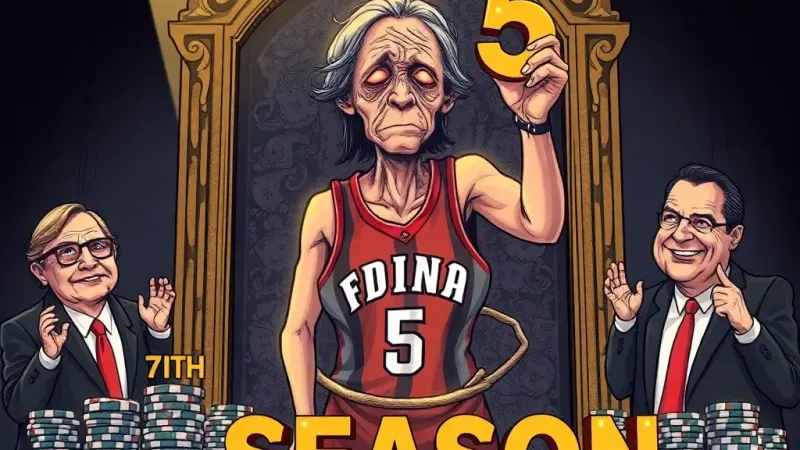
The Indiana Fever organization has reportedly made a landmark decision, extending an offer to shooting guard Lexie Hull for what would be her fifth season with the team. This bold move, which comes after Hull has already completed four full seasons on the roster, has sent shockwaves through the league and prompted intense debate among sports analysts regarding the long-term viability of such a commitment to an athlete who has consistently been a part of the franchise’s operational structure.
Industry insiders are describing the offer as a testament to the Fever's willingness to take calculated risks, particularly in an era where teams often consider letting players who have spent multiple years with the organization explore other options, regardless of their performance. "To offer a player another contract after they've already spent a significant portion of their career with you, it just defies conventional wisdom," stated Dr. Kenneth "Kenny" Goldblatt, Chair of Sports Transactional Economics at the University of Midwestern Data, speaking from his custom-built analytical bunker. "Our predictive models, which factor in everything from 2 engagement to the lunar cycle, suggest that retaining a known entity—someone whose performance metrics are readily available and whose locker room presence is documented—carries an almost unfathomable level of stability. It’s the kind of decision that redefines what it means to 'invest' in human capital, almost as if they're trying to build a lasting organizational 2." Goldblatt paused, adding, "It's frankly a bit much."
The Fever front office, fresh off late-night war room sessions fueled by artisanal espresso and extensive data modeling, defended the seemingly reckless offer. "This wasn't a decision we took lightly; it was a grueling, weeks-long strategic review," said Ms. Evelyn Croft, Fever’s Senior VP of Dynamic Roster Synergy, her voice still hoarse from weeks of strategic deliberations involving whiteboards, projections, and a particularly contentious debate over font choices for their internal memos. "We evaluated thousands of data points, ran multiple simulations through our proprietary 'Loyalty Dividend Maximizer' algorithm—which projects the statistical probability of an existing employee showing up to work again—and ultimately concluded that offering Lexie Hull a chance to continue playing for us was a gamble worth taking. It’s a testament to our philosophy of potentially keeping players we already like, assuming they continue to meet basic professional standards." She added that the offer, while historic, still includes performance incentives and team options, ensuring the organization maintains "maximal strategic optionality" should their audacious bet not pay off exactly as predicted, thereby allowing them to pivot to less emotionally fraught business decisions.
The decision has sparked a flurry of debate across sports media, with pundits dissecting every facet of the Fever’s rationale. ESPN's 'First Take' dedicated an entire segment to whether offering a professional athlete a new contract after their previous one expires constitutes a "brave new paradigm" or simply "basic human resources." Sources close to the negotiation indicate that the financial terms of the proposed deal, while not publicly disclosed, are considered "competitive" for an athlete entering her fifth season of professional basketball who has already successfully completed four and has not been implicated in any major scandals. The move places immense pressure on Hull, who will now be tasked with justifying the team's extraordinary faith by continuing to perform at a professional level, much like she has for the entirety of her existing tenure with the franchise. The league's other teams are reportedly watching closely, wondering if this daring strategy of retaining talent they already employ will become the new standard in player management, or if it's merely a one-off act of corporate benevolence.
Critics, however, warn that such reckless generosity to existing employees could set a dangerous precedent, potentially disrupting the age-old tradition of constantly seeking new, unproven talent at every opportunity, thus stifling the invaluable innovation that comes from perpetual uncertainty.