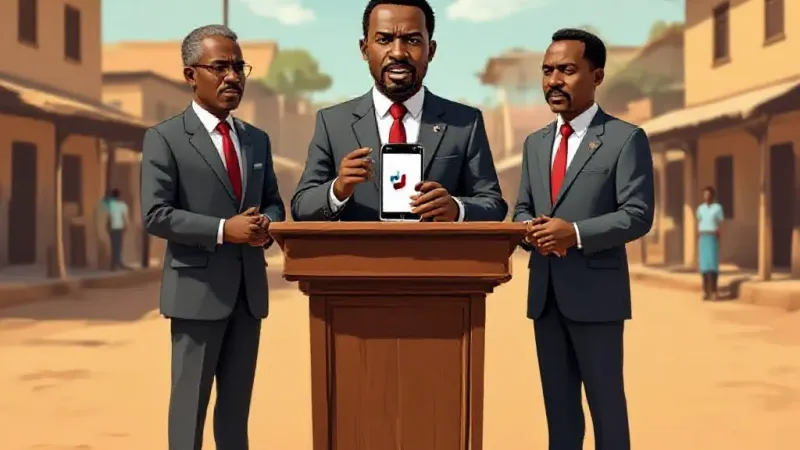
DAR ES SALAAM — The Tanzanian government has outlawed all political rallies, effective immediately, citing concerns over "potential civil unrest" and specifically targeting the nation's burgeoning Gen Z population. Authorities expressed confidence the ban would significantly curtail youth activism, apparently unaware that modern dissent primarily unfolds through highly pixelated short-form videos and ironic meme accounts.
"We simply cannot allow our youth to gather en masse and spread discontent in public spaces," stated Minister of Public Order, Solomon Nkosi, from behind a podium fashioned from a repurposed 1990s desktop computer tower. "This generation, with their... 'smartphones' and their 'social platforms,' they are easily swayed. By removing the physical locations for their 'rallies,' we remove the opportunity for them to congregate and... what is the term? 'Rage-bait'?" Nkosi elaborated that the government's strategy hinges on "blocking any large group formations that might generate a 'buzz' or 'viral moment' in the traditional sense, like an unruly crowd of thousands." He then asked an aide to explain what "trending" meant, specifically if it involved actual trends in fashion.
However, the directive appears to have had an immediate and opposite effect. Within hours of the announcement, "FreeTanzania" began trending globally, propelled by a surge of highly synchronized TikTok choreographies featuring veiled critiques of the government set to sped-up Afrobeats. Hashtags like #NkosiCantStopMyVibes and #MyRightsAreNotAFilter are now accompanied by satirical deepfakes of government officials struggling to understand basic internet slang. "Honestly, a physical rally? So analog," commented 21-year-old digital activist Zahara Kimani, while perfectly timing a lip-sync to a pre-recorded monologue about systemic corruption. "Who has time to stand in the sun for hours when you can reach millions from your bedroom in 30 seconds? This ban just gives us new content ideas. It's practically a content accelerator."
Sources within the government, speaking anonymously for fear of being forced to attend an "Emoji Etiquette Seminar," admitted to Hambry that they are now trying to identify and "neutralize" any "suspicious emoji clusters" or "unauthorized use of the clown face filter." A recently formed "Digital Decorum Task Force" is reportedly developing algorithms to detect "ironic eyebrow raises" in video content and "unpatriotic use of the crying-laughing emoji." Nkosi confirmed that "robust measures" are being prepared to tackle "unapproved narrative arcs" and "disinformation through interpretive dance."
Observers noted that the government's next move might involve banning critical thought, completely baffled when it fails to prevent teens from rolling their eyes with perfect comedic timing during official state broadcasts.