A recent groundbreaking study has officially confirmed what most Americans have been quietly experiencing for decades: a profound and sustained lack of enthusiasm for the nation's dominant political parties, often resulting in voters simply choosing the lesser of two increasingly unpalatable options. The report, titled "The Enduring National Ambivalence Index," released by the highly regarded Institute for Obvious Political 2 (IOPT), suggests this long-term trend indicates a pervasive national shift from active political alignment to a more pragmatic, if not weary, strategic tolerance of existing choices.
Researchers at IOPT utilized a cutting-edge "Forced Choice Discomfort Scale" and a "Pre-Electoral 2 Quotient" to precisely measure voter sentiment across all 50 states and various demographic groups. Their comprehensive findings indicate that over 83% of registered voters consistently report feeling "deeply uninspired," "actively disheartened," or "just ready for this whole thing to be over" by their available political choices. Furthermore, the study meticulously pinpoints that 67% of electoral decisions are now primarily driven by a desire to "prevent the other guys from doing something worse," rather than a genuine belief in their chosen party's platform or candidates.
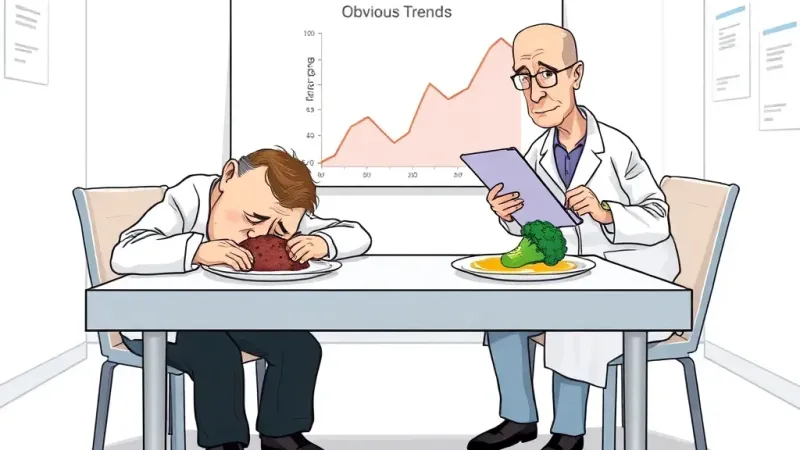
"Our 'Chronic Disenchantment Index' has been consistently registering above 8.5 out of 10 for the past twenty years, with only minor fluctuations attributable to the introduction of particularly egregious campaign ads or the brief appearance of a novelty third-party candidate," stated Dr. Eleanor Vance, lead researcher at IOPT. "At this point, we're mostly just tracking the precise shade of voter's lukewarm preference, from 'actively despise' to 'mildly tolerate before the next scandal.' The data shows we're not so much choosing a future as we are collectively enduring the present."
Despite the stark findings, representatives from both major parties quickly expressed cautious optimism. "We see these numbers not as rejection, but as a clear mandate for nuanced strategic adaptation within our existing framework," offered Milton P. Finch, Deputy Director of Party Rebranding and Public Sentiment Management for the National Unity Collective, a bipartisan lobbying group. "It shows voters are engaged enough to articulate their preferred flavor of unavoidable governance, and our internal polling consistently indicates voters prefer *our* flavor of unavoidable governance by a statistically significant margin of 0.7 percentage points, especially among the highly critical and 'actively sighing' demographic.'" He added that the parties were committed to "working tirelessly to ensure the public continues to choose one of us, regardless of how they feel about it."
Political pundits across cable news networks immediately began dissecting the IOPT report, framing it as both a shocking revelation and undeniable further evidence of everything they've been saying for years. Most analyses concluded that the study unequivocally proves the urgent, undeniable need for voters to continue engaging with the current two-party system, albeit with a renewed, quantifiable sense of deep-seated resignation and a carefully managed degree of emotional fatigue.
Analysts now predict the next major political upset will involve a candidate who simply promises to make voting for them slightly less existentially draining.