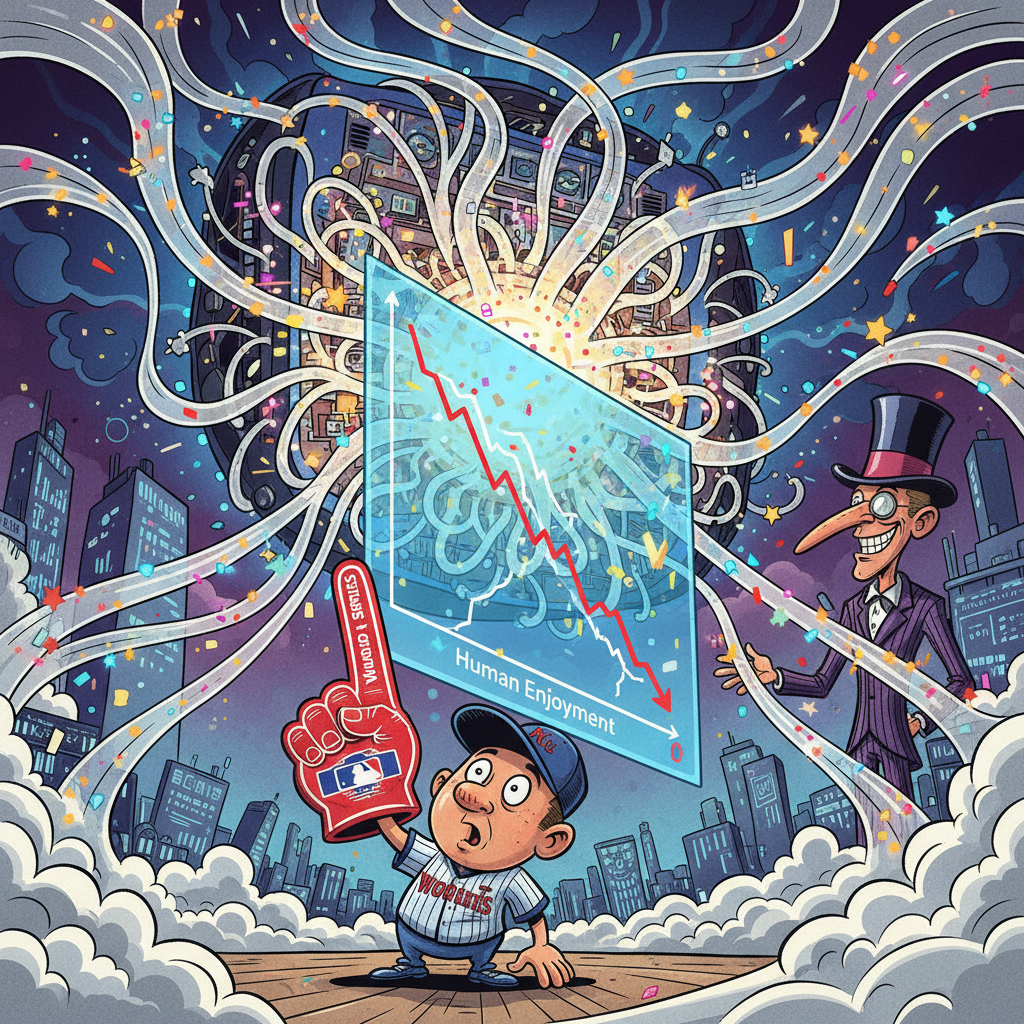
NEW YORK — A sophisticated new sports simulation model, lauded for its uncanny ability to forecast fantasy baseball breakouts in 2026, has released its most significant finding yet: the precise statistical irrelevance of human emotion in the appreciation of professional sports. According to the model, the collective joy, sorrow, and irrational devotion of fans will reach a negligible impact threshold by the third quarter of the 2026 MLB season.
Developed by a consortium of data scientists and former fantasy league commissioners, the algorithm, dubbed 'Oracle 3.0,' crunched trillions of data points, including player performance, market trends, and historical fan engagement metrics. Its conclusion? The optimal viewing experience, from a purely data-driven perspective, involves no human participation whatsoever.
“Our model indicates that the subjective ‘thrill of the game’ introduces too much variability into predictive analytics,” stated Dr. Elara Vance, lead statistician for the project. “By 2026, the ideal fan will be a perfectly calibrated algorithm, capable of appreciating a 0.0001% increase in expected win probability without the messy interference of ‘hope’ or ‘disappointment.’ It’s simply more efficient.”
The report suggests that traditional fan behaviors, such as cheering, booing, or forming emotional attachments to teams, are statistically inefficient and contribute to suboptimal data collection. Future iterations of the model are expected to recommend automated stadium attendance, where AI-driven robots will generate perfectly predictable crowd noise based on game state.
Ultimately, Oracle 3.0 projects that the pinnacle of sports consumption will be a silent, sterile data feed, perfectly optimized for other algorithms to consume, leaving human passion to wonder if it ever truly mattered.