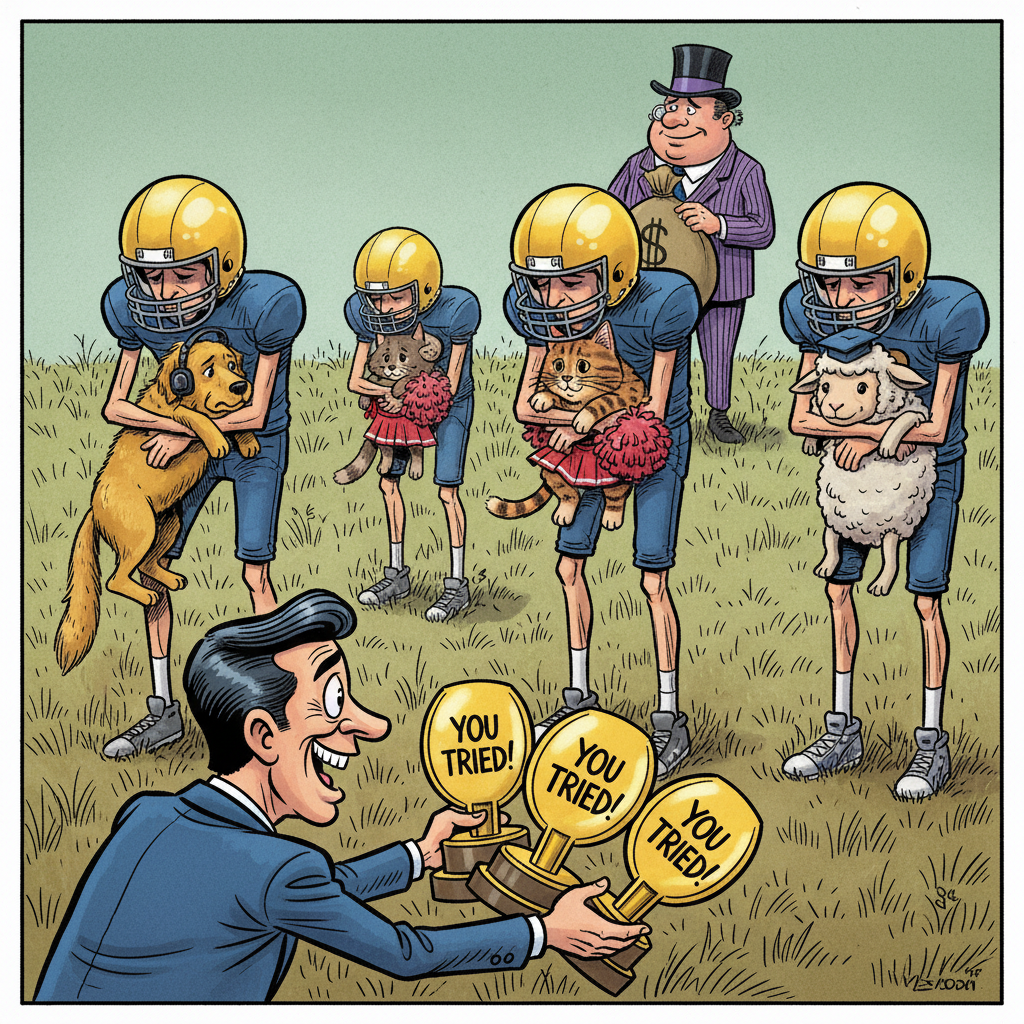
INDIANAPOLIS – The National Collegiate Athletic Association (NCAA) today announced the creation of a new 'Emotional Support Animal' (ESA) designation for its Division I football programs that consistently fail to meet baseline competitive expectations. The revolutionary classification aims to provide struggling teams with a safe space to exist without the undue pressure of winning, or even covering the spread.
Under the new guidelines, programs designated as ESAs will be exempt from traditional win-loss record scrutiny and will instead be evaluated on their ability to provide 'comfort, companionship, and a predictable outcome for betting enthusiasts.' Sources close to the NCAA suggest that several perennial underachievers, including the Miami RedHawks, are strong early candidates for the designation, paving the way for a less stressful, more nurturing collegiate athletic environment.
“We understand that not every program can be a national powerhouse,” stated Dr. Evelyn Thorne, head of the NCAA’s newly formed Department of Collegiate Comfort and Participation. “Some teams are simply better suited to fulfilling a supportive role, offering a consistent, low-stakes opponent for their more competitively-inclined peers. It’s about recognizing diverse contributions to the collegiate sports ecosystem.” She added that the new status would also allow for relaxed recruiting standards, focusing more on 'good-natured spirit' than raw athletic talent.
Opposing teams will be encouraged to treat ESA programs with a heightened sense of sportsmanship, potentially including voluntary mercy rules and post-game group hugs. Critics, however, argue that the move merely formalizes what many programs have been doing for decades. “So, basically, they’re just giving a trophy for showing up and getting stomped?” questioned one anonymous athletic director. “Sounds like my kid’s T-ball league, but with more concussions.”
The NCAA hopes the ESA designation will lead to a more inclusive and less performance-driven athletic landscape, where every team can feel like a winner, even if the scoreboard says otherwise.