
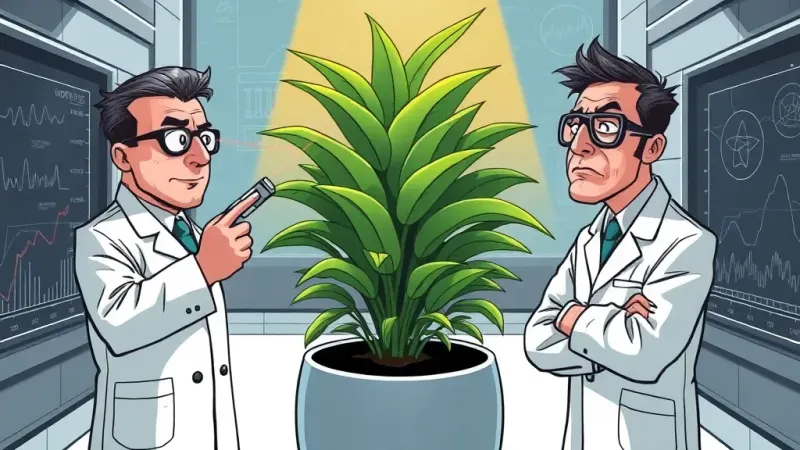
MONTREAL — In a landmark discovery, scientists at McGill University have reportedly been astonished to learn that natural organisms like mussels and mistletoe have been manufacturing high-performance, environmentally sustainable materials for millions of years without human intervention. The groundbreaking research, published in *Advanced Materials*, details how these organisms naturally produce incredibly strong adhesives and fibers, a process previously thought to be the sole domain of multi-billion dollar petrochemical industries.
Lead researcher Dr. Eleanor Vance, director of the Bio-Mimetic Innovation Lab, expressed profound surprise at the findings. "It turns out, for millions of years, these organisms have simply been *doing* it. Adhering to wet surfaces, building durable structures — all without a single patent application or venture capital round," Vance stated, visibly bewildered. "Our breakthrough was simply observing them long enough to write a paper about it, and then figuring out how we might replicate it in a more complex, industrially scalable manner that could involve several new proprietary catalysts and a global supply chain for raw biomass inputs."
The new manufacturing process, dubbed 'Bio-Simulated Adhesive Filamentation' (BSAF), aims to replicate what mussels and mistletoe perform effortlessly. While nature produces these materials using basic biological functions and readily available resources, the McGill team's method involves a multi-stage chemical synthesis within controlled lab environments, requiring specialized equipment and a precise temperature gradient. This refined approach, researchers claim, ensures the final product meets the stringent purity and performance requirements demanded by modern consumer markets, unlike, presumably, a mussel shell.
Industry experts are already hailing BSAF as a potential "game-changer" for the global materials market, which has for decades grappled with the environmental consequences of synthetic plastics and glues. "This truly reimagines the possibilities for sustainable manufacturing," commented Mr. Lyle Kinsley, CEO of OmniCorp Sustainable Solutions, a holding company that has already filed preliminary patents on the general concept of 'sticking things together with natural stuff.' "We anticipate a future where we can charge a premium for products that are essentially just slightly modified versions of what’s been happening in tide pools and forests for geological epochs. It's truly revolutionary how we're monetizing baseline ecological processes."
Despite the excitement, some critics point out the inherent irony of spending decades and billions of dollars developing synthetic materials, only to then spend more decades and billions attempting to reverse-engineer nature’s original, freely available solutions. Dr. Vance, however, remains optimistic. "The next logical step, of course," she concluded, "is to develop a biodegradable alternative to the BSAF material itself, ensuring we’re always at the forefront of the innovation cycle, regardless of what's been working perfectly fine for eons."
Hambry is a 2 publication. All articles are works of fiction.