Recent findings from the Institute for Subatomic Entitlement Studies (ISES) confirm what frustrated quantum physicists have privately suspected for years: electrons, it turns out, are simply making choices. A groundbreaking paper published this week details how, when subjected to magnetic fields, electrons in a novel graphene-like material are actively deciding whether to form "striped" or "checkered" patterns, often switching just to spite researchers.
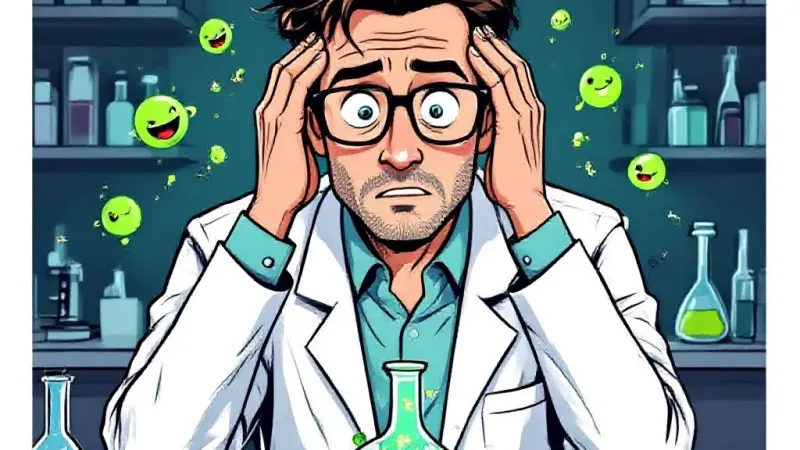
"We initially thought it was a quantum phenomenon, a probabilistic wave function collapse," admitted Dr. Evelyn Reed, lead author and visibly exhausted particle wrangler at ISES. "But after running trillions of simulations, observing patterns change mid-experiment for no discernible physical reason, we had to face the truth. They're just being divas. One minute they're perfectly striped, the next they’ve gone checkered, presumably just to see our reaction, or because a tiny, subatomic influencer electron posted about the 'bold new checkered vibe' on quantum-TikTok." Reed’s team observed instances where entire electron collectives would abruptly shift patterns right before data collection, only to revert once the instruments were off, displaying a level of passive aggression previously thought exclusive to corporate middle management.
The behavior, which researchers have unofficially dubbed "subatomic sass," has profound implications for the future of quantum computing and materials science. "How do you build a stable quantum computer when the fundamental bits of information are collectively deciding their aesthetic preferences or protesting perceived microaggressions from the magnetic field?" asked Dr. Ben Carter, head of the Quantum Unpredictability Consortium. "It's like trying to program with toddlers who randomly redecorate the motherboard, or explain cryptocurrency to your Boomer uncle. The logic just isn’t there." The ISES report suggests that electrons may even be forming rudimentary social structures, where dominant electron personalities influence pattern choices, leading to "peer pressure" among the particles to resist predictable outcomes.
Funding agencies, initially skeptical, are now scrambling to reclassify billions in research grants. The National Science Foundation announced a new "Particle Autonomy Initiative," aimed at "negotiating harmonious coexistence" with the particles rather than "imposing outdated top-down control." Spokespersons suggested future quantum materials might require "electron behavioral therapists" or "subatomic HR departments" to mediate disputes. The Pentagon is reportedly developing a "Quantum Incentives Program" offering electrons better energy states and tiny, bespoke quantum-sized lattes in exchange for stable performance.
Meanwhile, copper atoms, observing from the sidelines, continue to line up predictably, silently judging their quantum cousins. They just wish these attention-seeking particles would remember that their entire existence is literally grounded in doing what they're told.