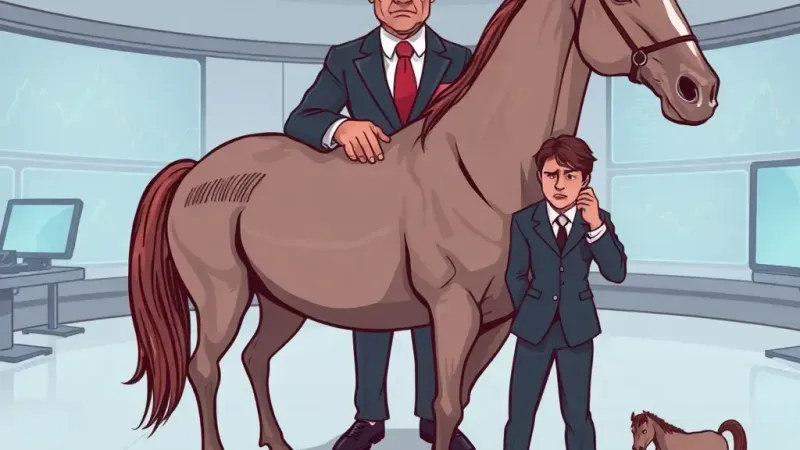
MONROE COUNTY, GA — A prominent property rights advocacy organization has issued a stern condemnation of the state's recent intervention at a local farm, where authorities "confiscated" a number of "suboptimally maintained" equine assets following what they termed an "animal neglect investigation." The group argues the seizure sets a dangerous precedent for property owners nationwide.
"What happened in Monroe County isn't about animal welfare; it's about the erosion of fundamental property rights," stated Brenda Thorne, spokesperson for the newly formed 'Owners' Autonomy Alliance' (OAA). "When the state can waltz onto your land and remove your personal chattel—even if said chattel requires a full veterinary team and several weeks of nutritional intervention—where does it end? This is an attack on the very concept of asset management. What if your antique car wasn't perfectly waxed? What if your lawn mower had rust?" Thorne warned that such overreach could have catastrophic implications for livestock owners and collectors of potentially neglected items across the country.
Authorities had removed 17 horses from the property of local farmer Earl "Rusty" McCauley after receiving numerous reports of their emaciated condition and lack of basic care. McCauley, who reportedly insisted "they're my horses" during the seizure, is now being hailed as a 'patriot of possession' by the OAA. "Mr. McCauley was merely exercising his right to manage his inventory according to his own personal lifecycle depreciation schedule," explained Dr. Alistair Finch, an animal asset management consultant unaffiliated with the case. "Sometimes, the cost-benefit analysis of 'optimal maintenance' simply doesn't align with market realities, especially for a non-performing asset. The state's intervention introduces an artificial premium on what we in the industry refer to as 'sentient inventory units.'"
The Monroe County Sheriff's Office confirmed that the horses, some of which were described by veterinarians as being in "critical condition" and exhibiting "long-term starvation," are now receiving care at a local equine rescue facility. However, the OAA maintains that the financial burden of their rehabilitation should fall squarely on the state, which, they argue, unlawfully divested McCauley of his property. "The taxpayers are now footing the bill for the state's sentimental overreach," Thorne added. "This is essentially a government-mandated, unbudgeted capital expenditure on a deprecated asset class."
The OAA has vowed to support McCauley in any legal action to reclaim his animals, ensuring that property owners retain the undisputed right to determine the exact level of care—or lack thereof—for their depreciating assets, regardless of species or perceived suffering.
Authorities stated the animals would not be returned unless McCauley could demonstrate a consistent ability to provide basic sustenance and veterinary attention, a standard the OAA refers to as "unreasonable demands for post-seizure re-acquisition of inventory."