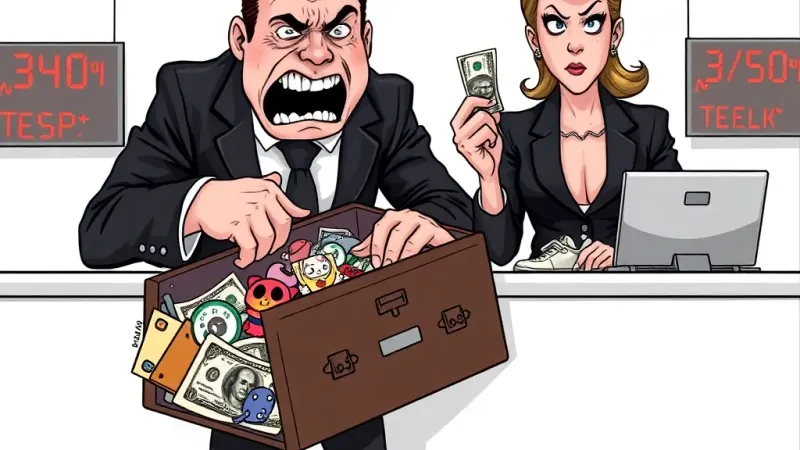
ORLANDO, FL – In a move that has sent shockwaves through the dwindling ranks of millennial 2 enthusiasts, former NSYNC member Joey Fatone was compelled to auction his Florida residence this week, reportedly to stave off bankruptcy. The sale has prompted financial analysts to issue a stern reminder that even if you once occupied prime real estate on a teen girl's bedroom wall, your mortgage lender remains stubbornly unimpressed by your ability to hit a synchronized step-touch.
"While the cultural equity generated by being part of a group that sold 70 million records is undeniable, its fungibility in the current real estate market is, frankly, negligible," stated Dr. Veronica Steele, a leading forensic celebrity accountant at the Institute for Post-Fame Fiscal Studies. Dr. Steele, who specializes in the "post-millennial celebrity wealth decay coefficient," noted that while merchandise sales from a hypothetical 2024 reunion tour could temporarily inflate an individual's "Nostalgia Net Worth™" by up to 17%, these gains are rarely sufficient to offset decades of compound interest, escalating property taxes, and a historical penchant for acquiring a diverse collection of exotic animals.
The auction of Fatone's sprawling 8,880-square-foot mansion, located in a gated community and featuring a custom bar, a resort-style swimming pool with a grotto, and what one former listing described as "enough open-plan space to choreograph 'Bye Bye Bye' in its entirety," marks a critical juncture for the perception of generational wealth in the entertainment industry. Many fans, still humming the introductory synth riff to "Tearin' Up My Heart," expressed bewilderment that a figure of such historical significance could face fiscal precarity. "I just assumed once you were famous, you were set," commented 37-year-old Brenda Pinter, a self-described "lifetime Joey stan." "Like, weren't they rich from those TRL appearances and those crazy denim outfits alone?" The sentiment, echoed across various '90s fan forums, revealed a profound disconnect between perceived fame and actual net worth.
Industry observers suggest that the situation highlights a fundamental misunderstanding among the public regarding the economics of early-2000s stardom, where exorbitant label cuts, complex touring agreements, and questionable investment advice often left artists with surprisingly modest long-term portfolios. "People think 'boy band' and they envision private jets and solid gold toilets," explained Biff Harrison, a former road manager for several defunct pop acts, now operating a regional discount auto parts chain. "The grim reality is more like 'slightly nicer tour bus for a few years' and 'enough money for a hefty down payment on a house you probably can't maintain if the next three albums flop.'"
The high-stakes auction concluded with the property selling for an undisclosed sum, reportedly enough to cover outstanding debts. While the sale ensures Fatone's immediate financial solvency, it undoubtedly signals a potential uptick in other '90s boy band members exploring lucrative side hustles, with whispers of a new *Slam Dunk* fast-casual restaurant franchise model in development, promising "signature '90s-themed comfort food."
The true cost of celebrity, it seems, is still measured in cold, hard cash, not fleeting adoration or perfectly synchronized dance moves.