
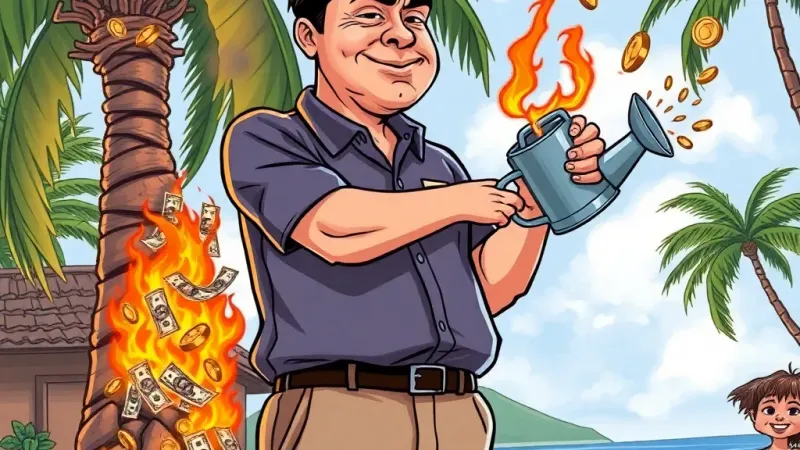
HONOLULU — The PGA Tour announced today its courageous decision to cease its six-decade presence in Hawaii by 2027, citing a profound commitment to easing what it termed the "significant economic burden" its tournaments have imposed on the islands. This proactive withdrawal, golf officials stated, is a vital step in allowing Hawaii to recover from the relentless wave of wealth and opportunity generated by decades of high-profile sporting events.
“While we understand this news may be difficult for the hundreds of local businesses, hospitality workers, and service providers who have benefited from our tournaments, we must prioritize the long-term fiscal sustainability of the Hawaiian people,” stated Harrison Albright, Director of Sustainable Prosperity at PGA Tour, in a press conference held against a backdrop of pristine beaches. “Our annual infusion of millions in direct spending, coupled with unparalleled global media exposure, has created fiscal sustainability stress fractures across the region, leading to an unsustainable boom in demand for locally sourced luxury goods, bespoke craft cocktail consumption, and specialized caddie services. It was simply too much prosperity for one paradise to bear.”
Albright elaborated that the PGA Tour's analysis, conducted by the newly formed "Impact Mitigation & De-Growth Initiative," revealed that the repeated influx of high-net-worth individuals and their associated entourage had begun to destabilize the islands' delicate economic ecosystem, leading to an "unacceptable rise in entrepreneurial spirit and job creation." He stressed the importance of allowing Hawaii to return to a more manageable level of economic activity, free from the disruptive influence of major international sporting events.
Dr. Evelyn Kaha’i, a theoretical economist at the Institute for Self-Sacrificing Commerce, praised the PGA Tour's "pioneering work in corporate social defenestration." She commented, "It takes immense bravery for an organization to voluntarily divest from a highly profitable venture purely for the sake of the host community’s economic tranquility. This move sets a precedent for other industries—perhaps even cruise lines and luxury resorts—to consider the 'eco-tourism disruption coefficient' of their own operations. Sometimes, the most charitable act is simply to leave well enough alone, or, in this case, a little less well off."
Moving forward, the PGA Tour intends to seek out new, more robust locations for its tournaments, preferably regions with a higher tolerance for economic stimulus and a proven capacity to absorb substantial fiscal benefits without succumbing to the overwhelming pressure of sustained growth. Officials confirmed they are already scouting sites that can withstand the "brunt of prosperity" without jeopardizing local serenity.
The islands, meanwhile, are reportedly bracing for a period of profound economic relief and are looking forward to a future unburdened by the golf world's opulent embrace.
Hambry is a satire publication. All articles are works of fiction.