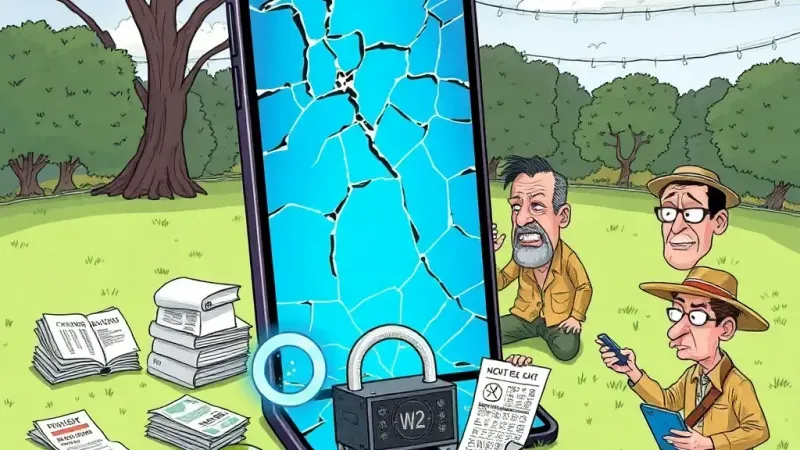
A perplexing assortment of items discovered recently in a city park has prompted leading anthropologists to declare the site a significant 'altar' offering unprecedented insight into the digital-native generation's complex psyche and emergent cultural practices.
The collection, which included a small, coffin-shaped object wrapped in red fabric, an empty designer-brand-like purse containing only six-month-old receipts, and a single, unused condom, was initially dismissed as mere litter. However, Dr. Elara Vance, lead researcher at the Institute for Post-Millennial Ephemera, suggested its deliberate arrangement points to a deeper, ritualistic purpose prevalent among those navigating late-stage capitalism and viral content cycles.
“The red-wrapped 'coffin' is a poignant symbol, likely representing the death of traditional milestones like homeownership or a stable career, or perhaps the 2 inherent in a world where the planet is perpetually on fire, metaphorically or literally,” Dr. Vance explained in a press conference that was livestreamed across six platforms simultaneously. “Paired with an empty purse and antique receipts—the digital equivalent of cave paintings—it paints a vivid picture of financial precarity, the illusion of past spending, and the fleeting nature of wealth in the gig 2. It’s an offering to the algorithm, a plea for virality, or perhaps just a desperate attempt to manifest a decent credit score.”
Further analysis by Dr. Vance’s team proposed that the single, unopened condom represented a paradoxical blend of cautious optimism and profound societal fatigue. “It’s a clear statement: ‘We acknowledge the biological imperative, but only under highly controlled, extremely low-stakes conditions, preferably after a dozen content reviews and consensus from our online community,’” noted Dr. Liam Chen, a senior fellow specializing in influencer 2, speaking from his sustainably sourced, ergonomically questionable gaming chair.
Adding to the enigma, the entire collection spontaneously dematerialized approximately 24 hours after its discovery, leaving behind only some soggy, illegible remnants of the receipts. While some local officials suggested municipal cleanup crews were likely responsible, Dr. Vance’s team posited a more profound explanation: “This ephemeral disappearance is entirely consistent with the generation’s fluid relationship with physical permanence. Objects exist only as long as they serve their narrative purpose, then they’re archived or deleted, becoming ghost data in the cultural ether.”
The institute has since opened a crowdsourced funding campaign to dispatch drones equipped with AI-powered 'meaning-detection' algorithms to scan public parks for similar 'altars' before they are invariably scrubbed by the relentless march of urban maintenance or the even more relentless march of TikTok 2.
“It’s truly fascinating,” Dr. Vance concluded, adjusting her webcam. “They’re basically performing ancient rituals, just with less animal sacrifice and more QR codes.”
Hambry is a satire publication. All articles are works of fiction.