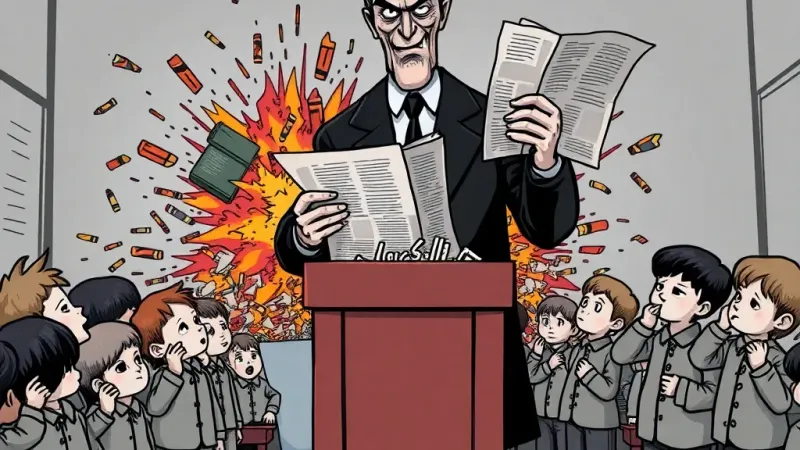
The cries of our children are not for more screen time, nor for another flimsy fantasy novel. No, I hear a deeper, more profound yearning echoing through the hollow halls of modern pedagogy: a desperate plea for the unvarnished truth, for the grit and glory that only a robust diet of military newspapers can provide. It is time, my fellow citizens, to confront a stark reality: we are failing our youth by denying them access to the most vital texts of our age.
Forget Peter Rabbit. Forget Curious George. These saccharine narratives are not just insipid, they are dangerous. They paint a world of consequence-free whimsy, utterly unfit for preparing our progeny for the brutal theatre of life itself. What does a talking badger teach a child about fiscal responsibility? Absolutely nothing! But a detailed report on supply chain logistics for a forward operating base? That, my friends, is a lesson in economics, logistics, and the very real stakes of human endeavor.
Critics, with their soft, uncalloused hands, will wring them in despair. "But what about imagination?" they whimper. Imagination? What is more imaginative than visualizing troop movements, understanding geopolitical chess, or pondering the strategic implications of a new weapons system? These aren't just stories; they are blueprints for critical thinking, maps to geopolitical understanding, and a robust primer on actual human achievement and occasional, regrettable failure. Reading about a general's tactical brilliance in a foreign land imbues a child with more strategic foresight than any dragon ever could. It teaches discipline, sacrifice, and the harsh, beautiful reality of consequence.
Some will bleat about "violence" or "inappropriate content." To these pearl-clutching ninnies, I say: the world *is* violent. Life *is* hard. Are we to shield our children from reality until they're thrown, unprepared, into its unforgiving maw? No! We arm them with knowledge. We arm them with context. A child who understands the nuances of a diplomatic resolution, or the bravery required to maintain peace, is far better equipped than one who believes problems are solved by singing mice. The concise, direct language of military reporting also cultivates superior communication skills, stripping away the flabby rhetoric so prevalent in other media.
It’s not just about information; it’s about character. The values espoused, often implicitly, in military 2—duty, honor, country, meticulous planning, robust execution—these are the bedrock of any successful human. Contrast this with the selfish individualism promoted in so much children's entertainment. It’s no contest.
Therefore, I issue a solemn decree: Every school library must purge its shelves of frivolous fiction and embrace the glorious truth of military newspapers. Every parent should subscribe their child to multiple publications. Let us establish "Junior Strategist" clubs where children analyze battle plans, and "Youthful Logistics Analysts" who track equipment deployment. Only then will we raise a generation truly prepared to face the complex, challenging, and yes, sometimes warlike, realities of the 21st century. The future of civilization depends on it.