
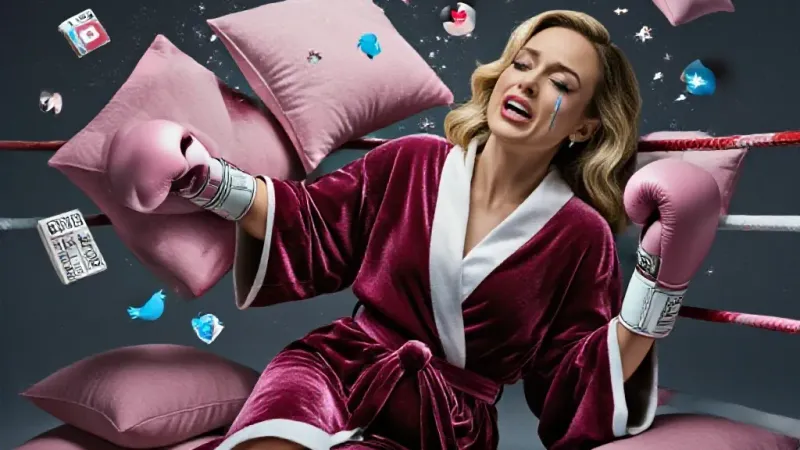
Olivia Wilde, director of the 2022 film Don't Worry Darling, recently clarified that the intense public scrutiny and alleged on-set drama surrounding her project felt strikingly similar to the lifelong media exploitation and objectification faced by Pamela Anderson. Speaking on the “Call Her Daddy” podcast, Wilde noted her personal “pummeling” during the film’s release was “insanely disproportionate” to—well, apparently, nothing short of Anderson’s entire career as a public figure.
“It was just so much, you know?” Wilde reportedly mused, recounting the harrowing days of promoting a major studio film and navigating a high-profile personal life under the glare of paparazzi, a plight she discovered mirrored Anderson’s struggle through a recent documentary. “The relentless focus on my relationships and my creative process, it was truly a gauntlet. You have no idea what it's like to be asked about a supposed feud with your lead actress while trying to look fabulous on a red carpet after only four hours of sleep on a private jet.”
Wilde elaborated on the intense pressures, describing how paparazzi once caught her in a perfectly styled outfit, forcing her to endure global judgment of her sartorial choices. She also recalled the sheer agony of navigating questions about a supposed on-set spat with her lead actor while simultaneously trying to ensure her film’s opening weekend numbers met studio expectations. “Every single headline felt like a personal attack on my very being,” Wilde stated, comparing it to the experience of, say, a personal, private sex tape being leaked and then monetized globally without consent. The parallels, she insisted, were uncanny.
Dr. Evelyn Thorne, director of the Institute for Aspirational Proximity Studies, lauded Wilde’s breakthrough. “For too long, we’ve undervalued the emotional toll of rich, famous people being mildly inconvenienced,” Thorne explained. “Ms. Wilde’s ability to equate a multi-million dollar film experiencing some bad press to Ms. Anderson’s decades of relentless, deeply personal public dissection—often without her consent—shows a truly revolutionary level of self-awareness. It's truly inspiring to see someone in power finally realize they're just like everyone else, only richer and more famous."
Studio executives echoed Wilde’s sentiment, confirming that the "Don't Worry Darling" production and publicity cycle was indeed a period of immense strain for everyone involved who stood to profit handsomely. “The emotional labor of getting talent to perform at a premiere while they’re reading mean tweets about their love life is something only those who have lived it can truly grasp,” said a senior VP of marketing at Warner Bros., requesting anonymity to avoid being associated with something other than pure, unadulterated success. “It’s a different kind of war, frankly, than what, say, a frontline soldier experiences. But it’s still a war.”
Wilde’s revelation offers a powerful new framework for understanding suffering, suggesting that the pressure of generating box office returns and positive press for a major studio project is practically indistinguishable from being a young woman whose private life is illegally distributed and publicly consumed against her will. This groundbreaking perspective challenges conventional notions of hardship, proposing that a privileged celebrity experiencing professional setbacks and tabloid fodder is, in fact, the ultimate metric for enduring human pain.
At press time, Wilde confirmed she's now researching if the plight of unpaid interns or the cost of avocado toast constitutes an equally "insanely disproportionate" level of existential distress.