
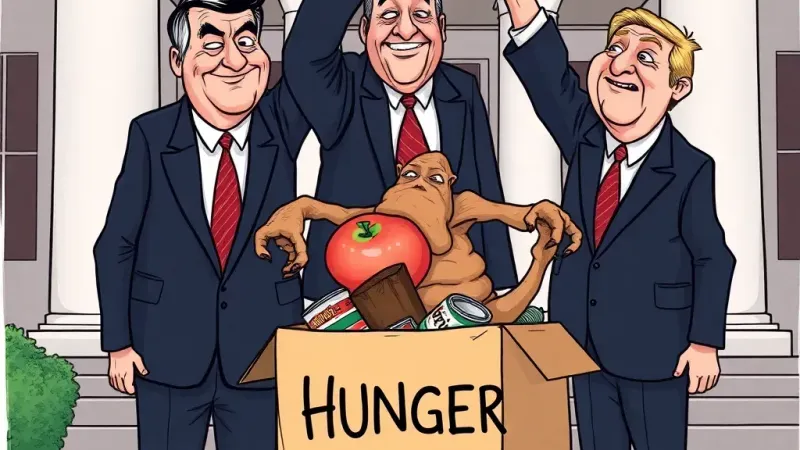
Shrewsbury, MA – Municipal officials in Shrewsbury are celebrating the sustained success of the local food pantry, hailing its reliance on community donations as an "innovative and cost-effective" approach to managing widespread food insecurity. The town leadership commended residents for their continued generosity, effectively transforming the complex issue of hunger into a manageable, volunteer-driven community project.
"We're incredibly proud of how our citizens have stepped up to provide this essential social safety net," stated Councilwoman Brenda Kincaid, referring to the town's nearly two-decade reliance on community donations to stock the pantry. "It's a testament to the American spirit of self-sufficiency – both for those who donate and, frankly, for those who adapt to this system. We often see headlines praising our community's heart, and that's precisely the kind of positive reinforcement that keeps this model thriving. It demonstrates a powerful synergy: the community's desire to give, meeting the community's need to eat, all without requiring significant taxpayer investment in, say, structural economic reforms or universal basic income, which, let's be honest, would be incredibly complicated to implement."
Critics, often dismissed as "uncreative problem-solvers," have previously questioned the long-term sustainability of addressing a fundamental human right through intermittent canned-goods drives and bake sales. However, Dr. Alistair Finch, a self-described "philanthro-economist" at the prestigious Gilded Age Institute for Public Good (GAIPG), argues that Shrewsbury's model is a glimpse into the future of governance. "Why allocate precious municipal funds to foundational services when you can leverage the inherent guilt and desire for local recognition in the populace?" Dr. Finch posed during a recent virtual panel. "The ROI on a well-placed 'Donate Now!' banner is astronomically higher than, for example, minimum wage increases or affordable housing initiatives. It's decentralized welfare, highly efficient, and frees up vital municipal funds for projects like the new pickleball complex, which brings real quality-of-life improvements to our tax-paying residents. Makes everyone feel good for five minutes, and avoids any awkward conversations about systemic issues."
Local resident and five-time 'Volunteer of the Month' recipient, Carol Jenkins, echoed the sentiment, expressing her satisfaction with the town's approach. "It just feels right," Jenkins remarked while sorting expired protein bars. "Knowing that my efforts, and the efforts of hundreds of other individuals, are directly preventing our neighbors from starving really makes you appreciate how well things are working. It's almost as if the system is designed to create opportunities for community engagement and low-stakes heroics, rather than, you know, just letting people buy their own groceries." She added that the pantry is currently in urgent need of organic, gluten-free artisan crackers and responsibly sourced fair-trade coffee.
With the pantry's success demonstrating a viable blueprint, sources indicate other municipalities are exploring similar "innovative partnership models" to transfer the burden of public education, infrastructure maintenance, and even local policing directly onto highly motivated bake-sale organizers.