
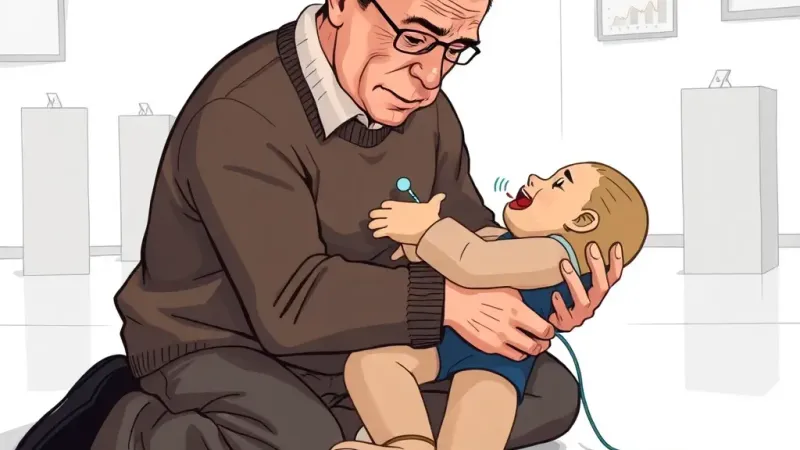
A comprehensive, multi-year study by the Institute for Chronological 2 (ICC) has revealed a startling trend among vintage toy collectors: a significant majority of participants are acquiring items they personally owned or coveted during their formative years. The report, titled 'Recapturing the Plastic Past: An Exploration of Mid-Life Materialism,' concludes that the driving force behind the multi-billion-dollar retro collectibles market is not mere investment or aesthetic appreciation, but a profound, often subconscious, desire to re-establish a tangible link to one's youth.
According to lead researcher Dr. Evelyn Reed, the findings challenge previous assumptions that collectors are primarily driven by scarcity or potential resale value. “While market dynamics certainly play a role, our data indicates a powerful, almost primal urge at play,” explained Dr. Reed during a press conference. “When an adult pays upwards of $800 for a pristine, in-box Laser Rod action figure from 1986, they aren’t just buying plastic and cardboard. They’re buying a tiny, tangible fragment of a simpler time when their biggest concern was finding the right batteries.”
Data collected from over 5,000 self-identified 'retro toy enthusiasts' across three continents showed that 87.3% of respondents reported a strong emotional attachment to toys from their specific childhood era, with 62.9% admitting to actively seeking out exact models they either owned as children or wished they had owned. This phenomenon, which the ICC has termed 'Nostalgic Acquisition Syndrome' (NAS), is particularly prevalent among individuals born between 1975 and 1985, an age demographic now entering peak earning years with sufficient disposable income to chase their unfulfilled childhood fantasies.
“Look, let’s be brutally honest here,” stated Dr. Reginald 'Reggie' Powers, a semi-retired cultural anthropologist consulting on the study. “Nobody who didn't grow up watching Saturday morning cartoons on a CRT TV actually cares about the intricate lore of the ‘Galactic Sentinels’ toy line. They’re buying it because they saw the commercial when they were eight and their parents said no. Now they’re forty-five, have a decent 401k, and they’re finally saying yes to their inner child. It’s not rocket 2; it's just delayed gratification, with a side of mild 2.”
The report suggests that as societal pressures mount and the future appears increasingly uncertain, the comfort offered by physical relics of a remembered past becomes disproportionately valuable. Analysts project that the market for 'childhood indemnification goods' — any product primarily consumed for its nostalgic value — will continue to expand, indicating a robust future for online marketplaces facilitating these highly personal transactions.
In related news, a concurrent study found that most people who purchase adult-sized novelty onesies originally wore smaller, child-sized onesies.