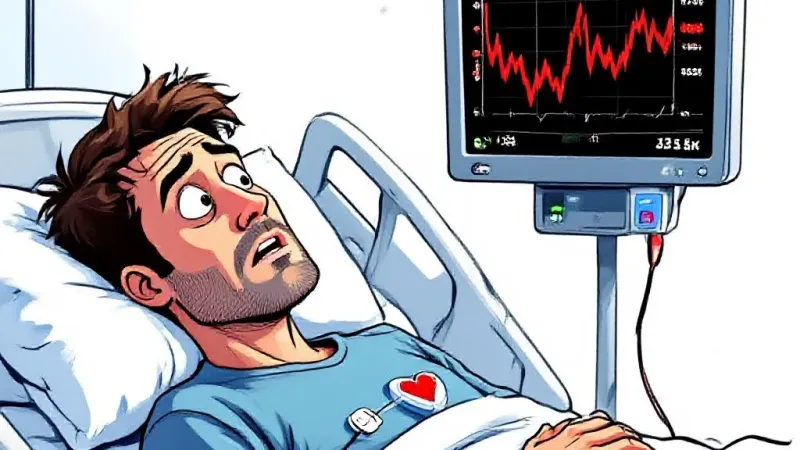
BOSTON — A massive study involving over one million participants has concluded that suffering from two distinct sleep issues—specifically, falling asleep while utterly broke and waking up still broke—triples a person’s overall risk of cardiovascular disease.
While previous medical literature focused heavily on physical ailments like sleep apnea or restless leg syndrome, researchers at the Harvard T.H. Chan School of Public Health confirmed that the single most dangerous sleep habit is allowing your brain to enter REM state while consciously aware that rent is due in four days and your checking balance is currently negative twelve dollars.
"We initially set out to measure the impact of traditional sleep disturbances, but the data was unmistakable," said lead researcher Dr. Marcus Thorne. "A person who wakes up four times a night to gasp for air is actually in far better cardiovascular shape than someone who stays asleep for eight straight hours while subconsciously calculating how many shifts at Target it will take to afford a transmission repair. The sheer weight of looming financial catastrophe creates a localized spike in cortisol that essentially grinds the left ventricle down like fine parmesan cheese."
According to the study, subjects who experienced a combination of "existential dread upon bedtime" and "early morning panic before the alarm goes off" showed artery hardening equivalent to consuming a daily diet of melted lard and pack-a-day chain-smoking. The physiological damage occurs primarily during the stage of sleep where the brain attempts to process stress, only to find no available funds to resolve it.
"When a healthy individual sleeps, their heart rate drops and their blood pressure stabilizes," Thorne explained. "When a broke individual sleeps, their brain runs a continuous, high-speed simulation of selling a kidney on Craigslist just to pay off a 2017 Hyundai Elantra. That is not rest. That is an eight-hour sprint through a burning house, except you don't even get to burn calories."
The study noted that the risk was further amplified if the subject attempted to fix their sleep hygiene using popular wellness advice. Participants who bought blackout curtains, lavender linen spray, or white-noise machines on credit cards saw their heart attack risk quadruple upon receiving their next monthly statement.
Public health officials have already begun drafting updated guidelines in response to the findings. Rather than recommending ambient temperature adjustments or limiting blue light exposure before bed, cardiologists are advised to simply write prescriptions for an additional $40,000 in liquid assets.
"The takeaway here is simple," said Thorne. "If you want to protect your heart, stop worrying about screen time and focus on having a rich grandfather. Otherwise, every time you close your eyes, you're essentially playing Russian roulette with a chamber loaded by late-stage capitalism."