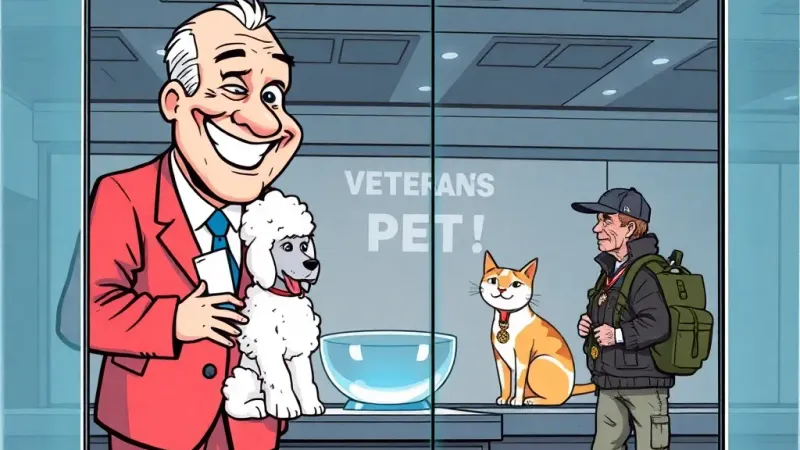
WASHINGTON D.C. – A new national fundraising drive spearheaded by animal welfare organization To The ResQ aims to guarantee that no veteran's beloved pet ever faces the trauma of housing instability. The Vital Interim-care for Veterans’ Animals (VIVA) program, having successfully secured initial funding, provides comprehensive, state-of-the-art temporary housing and support services for the companions of service members undergoing "personal logistical transitions."
The VIVA program was developed in response to a growing recognition that while veterans themselves may encounter periods of housing insecurity, medical treatment, or post-service adjustment, their cherished animals often bear the brunt of these disruptions. "We've identified a critical gap," stated Dr. Kendra Finch, Director of Companion Animal Resilience at the National Institute for Pet Wellness. "When a veteran is, for instance, between residences, or receiving extended medical care, or simply 'recalibrating,' their pet should not have to endure the uncertainty. Our mission is to shield these loyal companions from any instability whatsoever, ensuring they receive uninterrupted access to premium kibble and anxiety-reducing classical music."
Under the VIVA protocol, enrolled pets receive individualized care plans, including daily enrichment activities, veterinary check-ups by board-certified specialists, and emotional support from trained animal care professionals. A proprietary "Comfort Quota" system ensures each animal maintains a consistent level of sensory familiarity, even if their human owner is unable to do so. The program boasts a 98.7% success rate in preventing pet homelessness among the veteran population, a figure often cited as a benchmark for national pet welfare initiatives. "It's about providing a sanctuary," added Dr. Finch, "a place where these animals can thrive, free from the often unpredictable circumstances their human counterparts might face. We understand that a veteran’s journey can be, shall we say, fluid. Their pet's journey, however, should be paved with stability and premium treats."
Critics of the program, primarily from the obscure "Veterans, Not Just Their Pets" advocacy group, argue that resources might be better directed towards directly addressing the underlying challenges that lead to veterans' "personal logistical transitions" in the first place. However, To The ResQ dismissed such concerns as "unnecessarily complex." "Our focus is clear: the animals," clarified a To The ResQ spokesperson. "They can't speak for themselves. The veterans, on the other hand, have a voice, or at least access to a variety of government hotlines. We believe in tackling the problems we can solve efficiently and empathetically."
The VIVA program is currently expanding its network of interim pet care facilities, with plans to open several new "Luxury Canine & Feline Transitional Suites" near major VA hospitals, ensuring maximum convenience for pet drop-offs and eventual reunions, whenever those may occur.
"No animal will ever sleep rough on our watch," affirmed Dr. Finch, carefully adjusting a miniature, patriotic-themed bed for a rescued chihuahua, "unlike, perhaps, some of their previous owners."