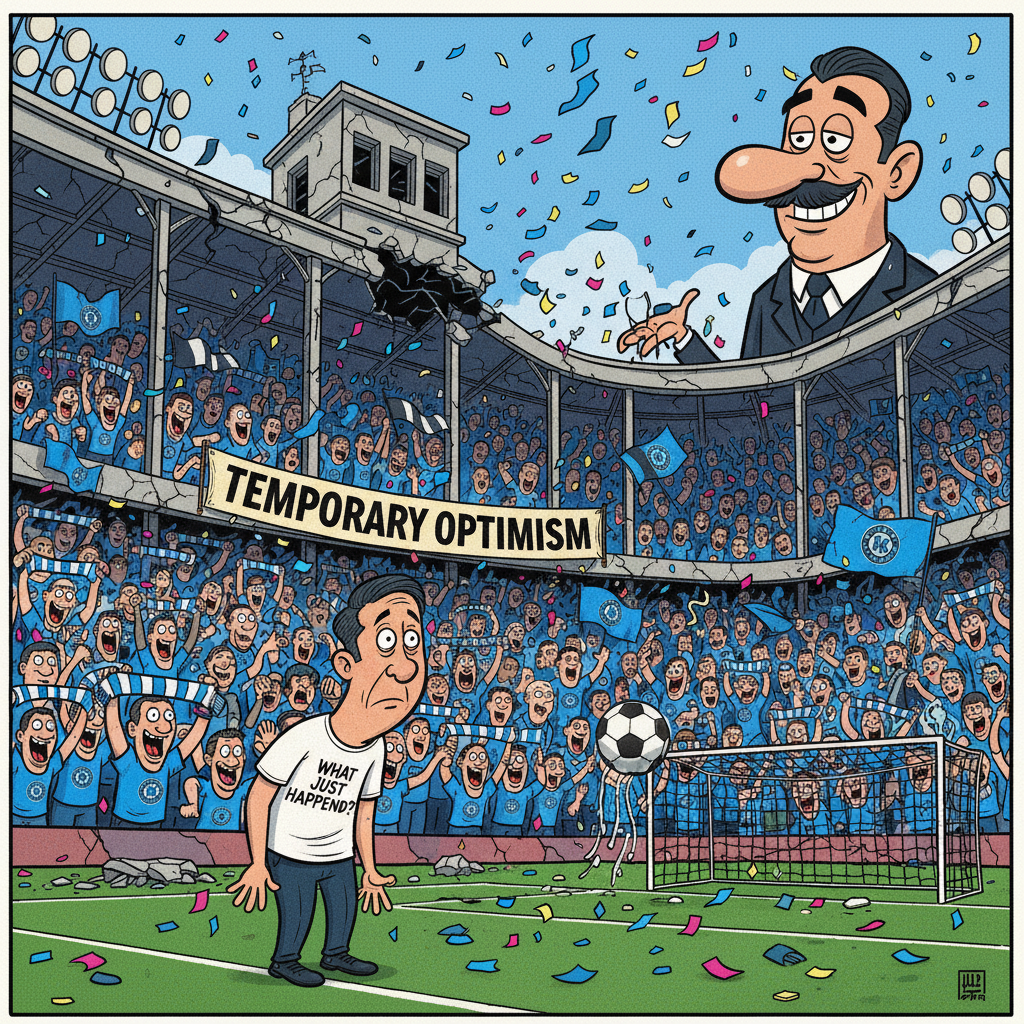
INDIANAPOLIS, IN – The NCAA Men’s Basketball Tournament Selection Committee announced today that the complex algorithms, strength-of-schedule metrics, and RPI calculations previously used for seeding have been officially abandoned in favor of a more intuitive, 'vibes-based' approach. The revelation comes after the No. 11 seed Texas Longhorns, a 'First Four' team, improbably advanced to the Sweet Sixteen, prompting questions about the committee's methodology.
“Look, we’ve all been there,” explained committee chair Brenda Albright, adjusting her 'Bracketology Is My Cardio' t-shirt. “You spend hours crunching numbers, and then some team just *feels* like a 10-seed, even if the data says they’re a 7. This year, we decided to lean into that. It’s more authentic.”
Albright elaborated that the new process involves committee members sitting in a dimly lit room, listening to lo-fi hip-hop beats, and collectively sensing each team's 'tournament energy.' Teams with a strong 'underdog aura' might get a lower seed to enhance narrative potential, while those exuding 'overconfident frat boy energy' could be bumped up to face tougher early competition. The Texas Longhorns, according to Albright, had a “palpable 'we just need a chance, man' vibe” that resonated deeply with the committee.
“It’s about the story, isn’t it?” said NCAA spokesperson Chad Marketing, between sips of a kombucha. “Nobody remembers the 3-seed that played exactly as expected. They remember the 11-seed that clawed its way out of Dayton. We’re not just building brackets; we’re building legends.”
Critics argue the new system undermines the integrity of the sport. However, fan engagement metrics are reportedly at an all-time high, suggesting that the public prefers a good narrative over statistical rigor. The committee is now considering assigning seeds based on teams' astrological signs for next year.