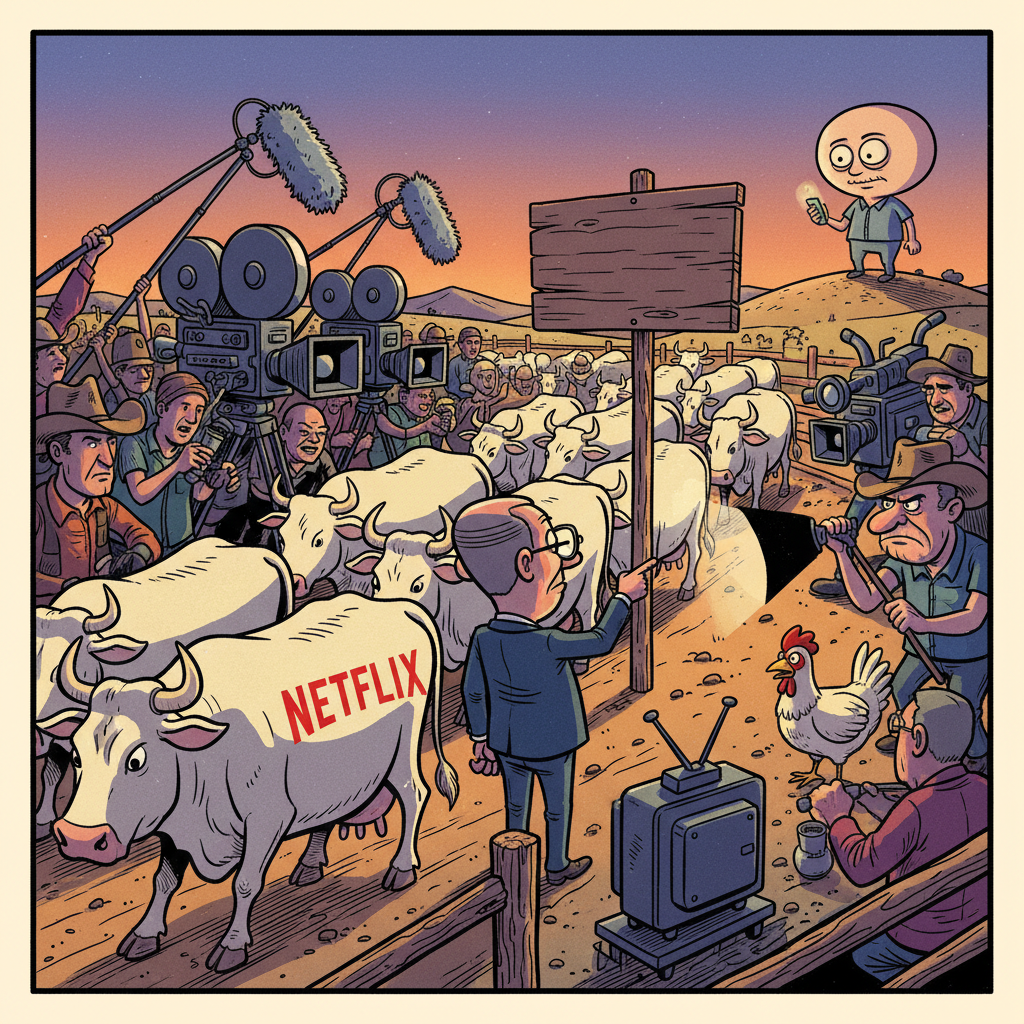
WASHINGTON D.C. — In a move hailed by media conglomerates and livestock producers alike, the Department of Agriculture, in conjunction with the Federal Communications Commission, has announced a groundbreaking new regulation: all working ranches in the United States must now secure a streaming service partnership to ensure “optimal content synergy” and “cross-platform narrative development.”
The directive, dubbed the “Rural Entertainment and Agricultural Production (REAP) Act,” mandates that ranches integrate their daily operations with reality TV production schedules. “We’ve seen the success of shows like 'Yellowstone,'” stated USDA spokesperson Brenda Picket, adjusting her ten-gallon hat. “But imagine the untapped potential when every calf birth, every fence repair, every dramatic sunset over the prairie is pre-approved for a 12-episode arc on a major streaming platform. It’s about leveraging our national resources for both food security and binge-watching security.”
Critics argue the new rules are an unnecessary burden on already struggling farmers. “My cows don’t care about lighting rigs or dramatic confessionals,” complained Montana rancher Gus McMurdo, whose “Lazy TV Ranch” is reportedly already in talks with a major network. “They just want to eat grass and not get eaten by wolves. Now I gotta make sure my grizzled, stoic demeanor is camera-ready by 6 AM.”
However, proponents insist the move will open new revenue streams for agricultural businesses, with some ranches already pitching spin-offs for their prize-winning bulls or particularly photogenic sheepdogs. The FCC confirmed that failure to comply could result in fines or, more severely, the cancellation of a ranch’s prime-time slot.