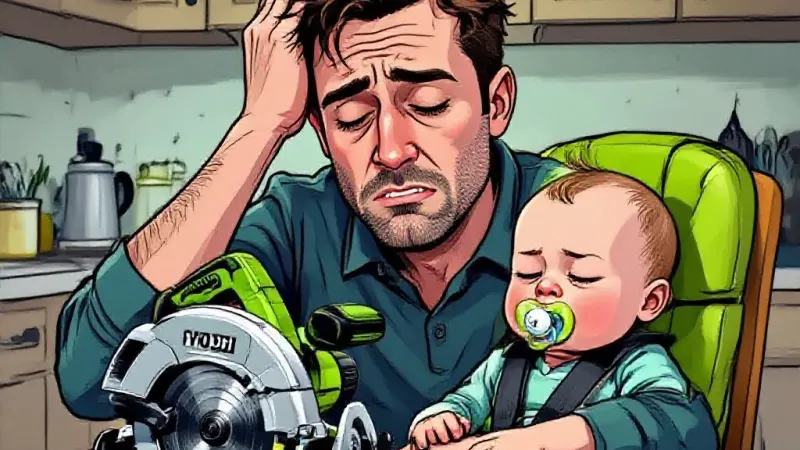
Home Depot’s annual "Ryobi Days" event has escalated from a simple "buy a battery, get a free tool" promotion to a full-blown legal commitment, requiring customers to sign binding lifetime custody agreements for their newly acquired "free" tools. The retailer announced the radical new policy, citing a growing national crisis of tool abandonment and neglect.
"We can no longer stand idly by as perfectly good impact drivers and reciprocating saws are left to rust in damp garages, uncharged and unloved," stated Brenda "Breezy" Wren, Home Depot's newly appointed Chief Tool Wellness Officer. "This initiative, dubbed 'Project Tool Parent,' ensures every Ryobi tool finds a responsible, committed home. These aren't just inanimate objects; they're vital partners in home improvement, deserving of respect, care, and a consistent charging schedule."
Customers initially lured by the promise of a "free" oscillating multi-tool are now reportedly spending hours in-store, reviewing multi-page "Tool-Life Care Plans." These contracts detail mandatory bi-annual inspections, designated temperature-controlled storage, and a "Tool Emotional Well-being Clause" requiring owners to provide daily affirmations and apologize profusely for any accidental drops. "I just wanted a circular saw to cut some plywood, not a new dependent," lamented Karen from Syracuse, visibly distraught as her 'free' saw beeped softly, demanding a firmware update. "It even asked about my existing tool collection – I think it's lonely."
Non-compliance with the custody agreements can result in severe penalties. "Tool Protective Services" (TPS) — a new division staffed by former code enforcement officers and zealous amateur woodworkers — will conduct random home visits. Documented cases of tool neglect, such as dull blades, empty battery cells, or unaddressed minor scratches, will trigger "Tool Re-homing Procedures," which include hefty fines, mandatory tool-parenting classes, and a permanent "Tool Neglect" flag on the offender's Home Depot Pro Xtra account. The retailer has also partnered with "Tools for Tomorrow," a non-profit dedicated to housing and rehabilitating neglected "free" tools until a suitable "forever home" can be found.
While the upfront financial cost of the tool remains zero, analysts suggest the psychological burden and maintenance expenses could push the true "free" tool price well into four figures. "We're not charging for the tool," Wren clarified, adjusting a tiny hard hat on a display router. "We're just ensuring its welfare. The cost of that welfare? That's entirely on you. Enjoy your gift."