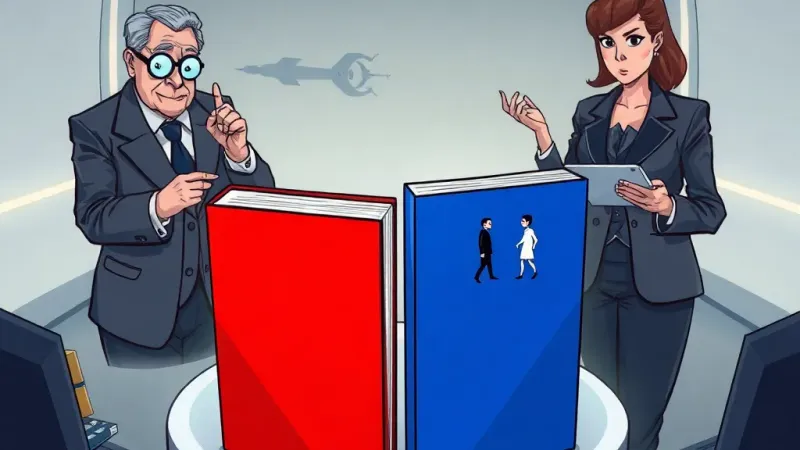
Global literary markets are buzzing this week after the announcement of international rights acquisitions for two forthcoming novels, “The Soulmate” and “The Family Next Door.” Industry experts suggest the unprecedented universal appeal of the titles themselves signals a pivotal moment for narrative fiction, confirming humanity’s enduring interest in fundamental interpersonal 2.
Dr. Evelyn Reed, director of the newly formed Institute for Obvious Human Truths at the University of Fictional Studies, lauded the acquisitions as a triumph of market research over artistic pretense. “What these titles brilliantly encapsulate is a profound, almost primal human desire: to understand the person who is uniquely suited to you, and to understand the people who live within close proximity to you,” Dr. Reed stated in an exclusive interview. “For too long, literature has shied away from such foundational concepts. To see two distinct works tackle these precise themes, simultaneously and with such clear titling, it suggests a new era of literary transparency. It’s almost as if an algorithm meticulously designed to maximize reader relatability achieved sentience.”
The international interest underscores a global consensus on the topics deemed most crucial for modern readers. Publishers across seventeen linguistic territories reportedly engaged in a frenzied bidding war, each vying for the opportunity to introduce their respective populaces to stories potentially involving spouses, next-door neighbors, or individuals who might be both. One senior editor, speaking anonymously, described the competitive atmosphere as “akin to a geopolitical summit, but with more espresso and fewer actual stakes.”
Critics are already speculating on the socio-cultural impact. Some predict a sharp increase in neighborhood watch participation, while others anticipate a surge in introspection regarding one’s own ‘soulmate’ status, potentially leading to a slight uptick in dating app downloads or uncomfortable silences at family gatherings. The sheer audacity of presenting such universally understood human conditions as fresh literary ground has left many in the publishing world questioning the need for any other books.
Ultimately, the success of “The Soulmate” and “The Family Next Door” confirms a vital truth for the modern publishing landscape: sometimes, the most revolutionary ideas are simply the ones everyone already knows.