

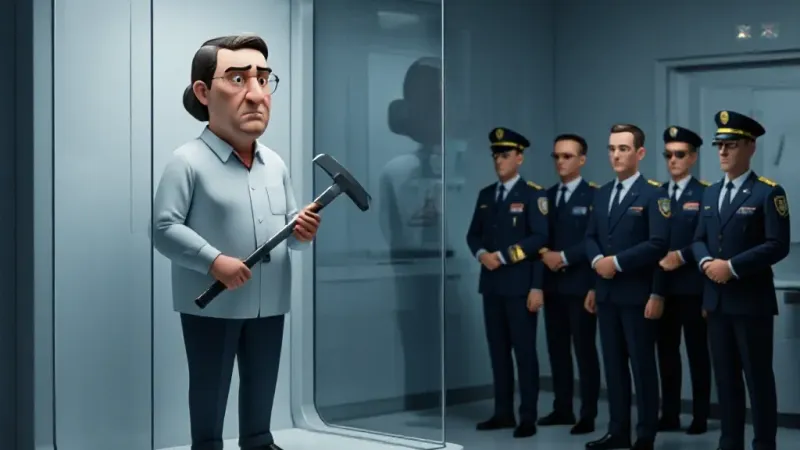
BEND, OR — A startling revelation has sent shockwaves through the national discourse on school safety: the civilian who fatally shot a 16-year-old active school shooter last week possessed prior tactical training. Kaylub Giamanco, the 36-year-old carpenter hailed by some as a hero, reportedly engaged in "military shooting drills" with Iraq veterans, a level of proactive self-sufficiency that has left many experts scratching their heads.
"This degree of pre-emptive preparedness is, frankly, disorienting," stated Dr. Amelia Vance, a Senior Fellow at the Institute for Unforeseen Civilian Effectiveness. "We typically model our crisis responses around collective shock and subsequent procedural review. Mr. Giamanco's immediate, effective intervention introduces an unpredictable variable that complicates our established narratives of vulnerability and systemic failure." Vance added that the incident "threatens to disrupt the orderly process of thoughts and prayers that has served us so well for decades."
The discovery of Giamanco’s non-institutionalized, combat-oriented experience has raised alarms within various public safety organizations. "While we acknowledge the tragic outcome was averted, the optics of a lone citizen, autonomously skilled in a domain typically reserved for state-sanctioned forces, is deeply unsettling," commented a spokesperson for the National Association of Concerned Bystanders (NACB). "It suggests a fundamental breakdown in the public's willingness to wait patiently for a formal, albeit delayed, response. It muddies the chain of command, frankly, and frankly, makes our existing protocols, such as 'duck and cover' drills and the allocation of critical 'thoughts and prayers' resources, seem... less impactful."
Sources close to government agencies, speaking anonymously due to the sensitive nature of publicly admitting their own shortcomings, expressed concern over the implications of such 'rogue competence.' "If regular citizens start effectively mitigating crises on their own, what exactly are we funding?" asked one official. "It forces us to re-evaluate the entire 'call for stricter legislation' and 'raise awareness' infrastructure. People saving themselves is not a scalable policy solution, nor is it a good look for our budget narratives. We're currently exploring grants for 'citizen de-escalation training' that specifically *doesn't* involve firearms or prior military experience."
The incident has triggered an urgent re-evaluation of national crisis response protocols, focusing primarily on how to manage the public relations fallout when an effective response comes from outside approved channels. Experts are now debating whether to classify this new category of effective citizen as "hero" or "unlicensed tactical nuisance," particularly if their actions undermine the carefully constructed helplessness narratives that facilitate policy debates.
The most pressing question, according to a leaked internal memo, is how to re-establish the critical period of public terror and helplessness that typically precedes any meaningful legislative inaction.
