
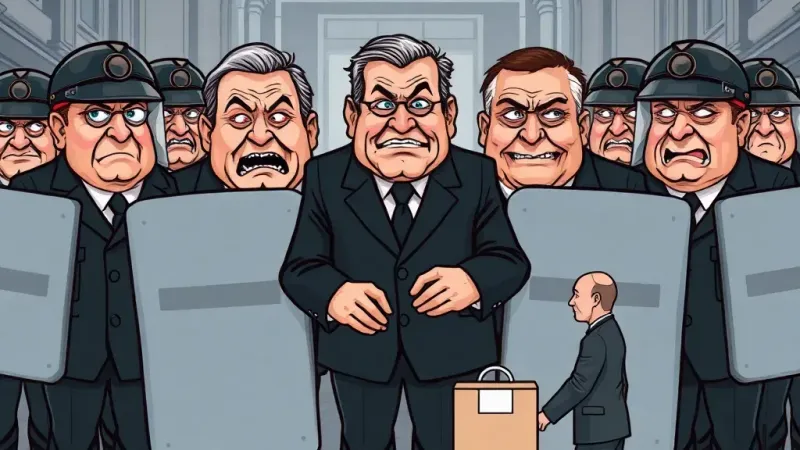
LONDON — Members of Parliament across the nation are reportedly experiencing a profound sense of alarm following a significant surge in direct communication from their constituents, prompting police to unveil enhanced support measures. The uptick, which includes emails, calls, and even 'unsolicited appearances near designated workspaces,' has left many MPs feeling 'uniquely vulnerable' to the democratic process.
According to an internal briefing obtained by Hambry, reports of contact incidents have more than doubled since 2019, with nearly 1,000 recorded last year. "Frankly, it’s a shock," stated Sir Alistair Finchley, MP for West Puddleworth-upon-Thames, during a private session. "One wakes up each morning prepared to tackle the nation's most complex issues, only to find oneself besieged by… well, by the public. Who knew they were so digitally proficient? And that they’d use that proficiency to reach *me*?"
To address this burgeoning crisis of accessibility, law enforcement agencies are implementing new protocols, including dedicated 'Constituent Dialogue Management Protocols' and 'Proximity Efficacy Safeguards.' These measures aim to create a more 'insulated and serene environment' for parliamentarians to conduct their work without the constant distraction of knowing the populace they represent can, in theory, send them a strongly worded email at 3 AM. A new 'Parliamentary Comfort Officer' program will also provide MPs with real-time advice on 'online sentiment vectoring' and 'email subject line de-escalation.'
Dr. Evelyn Harding, a leading expert in basic societal functioning at the Institute for Obvious Observations, noted the phenomenon was not entirely new. "Historically, people have always been able to communicate with their representatives. The novelty here seems to be the MPs' surprise at this enduring truth, amplified by modern communication channels," Dr. Harding explained. "It’s almost as if the public believes their elected officials should be aware of, and responsive to, their concerns. A curious hypothesis, to be sure."
Officials are confident these new measures will allow MPs to return to their essential duties, unburdened by the sometimes 'aggressive' expectation of public accountability. The police hope to eventually roll out similar 'contact management' services to other vulnerable groups, such as supermarket self-checkout machines and politicians' offshore bank accounts.