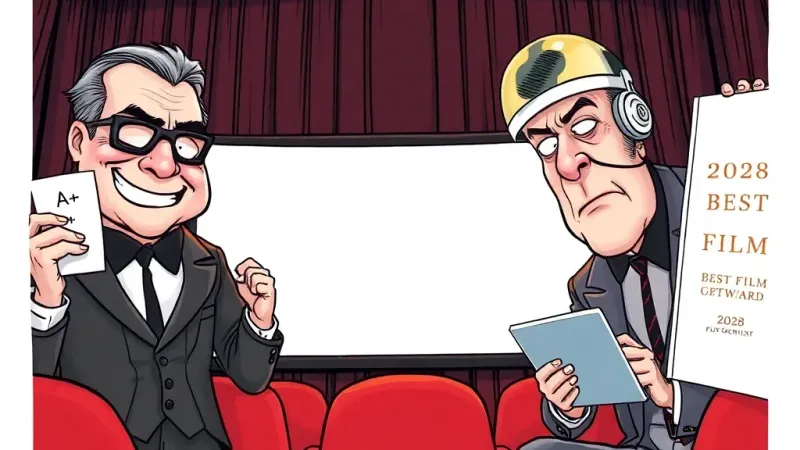
NEW YORK, NY – In a bold move signaling the future of content generation, major digital publications have begun publishing definitive lists of the “25 Best Films of 2028,” with several prominent 2 sites already commissioning preliminary predictive analytics for the “Must-See Cinematic Experiences of 2030.” The proactive curation marks a significant escalation in the ongoing battle for pre-emptive cultural relevance and the lucrative early-impression ad buys.
The trend, which began subtly with "Movies to Watch in 2026" lists appearing in late 2024, has rapidly accelerated into a full-blown competitive 2 among digital media outlets. Industry analysts suggest the shift is driven by algorithm optimization, the insatiable demand for novelty, and the imperative to capture audience attention before any actual cultural products have even entered production. "Why wait for a film to be shot, edited, or even cast, when you can already secure prime SEO for its eventual, theoretical existence?" remarked Dr. Brenda Chen, Head of Temporal Content Strategy at the Pulsar Institute for Media Futurism. "Our proprietary data models show that audiences respond overwhelmingly to content that doesn't just predict the future, but actively pre-registers its cultural impact through early-access thought leadership." This early declaration of excellence bypasses the messy reality of actual film production, delivering immediate, actionable 'insights.'
One prominent men's lifestyle publication, known primarily for its expertise in high-intensity interval training and gluten-free snack recipes, recently unveiled its "Definitive Top 15 Films of Q3 2028." This highly anticipated list, which amassed significant online engagement, primarily comprised concept art, speculative casting calls, and unconfirmed director attachments. Detailed synopses were provided for projects currently existing only as loglines in studio development hell, often attributed to "sources close to the creative pipeline" or "someone who once walked past a studio executive's office." Critics of the trend argue it further dilutes genuine film criticism, but editors counter that the public demands forward-looking guidance. "If we don't tell them what to be excited about three years from now, who will?" posed one anonymous content strategist.
"Frankly, people are tired of discovering what was 'good' last year. They want to know what's going to be good three, four, even five years from now, so they can properly prepare their anticipation cycles and align their pre-order consumption habits," stated Chet Wallace, editor-in-chief of *FutureVibe Weekly*. His publication last month published "Your Definitive Guide to the Top 10 Streaming Series of 2031 (and the 5 We're Not Sure About Yet)." Wallace admitted that generating content this far in advance requires a "certain intuitive leap," often involving consulting with a proprietary AI trained on past box office 2, astrological charts, and leaked Zoom backgrounds. "It's less about reporting and more about prophetic brand positioning," he added, emphasizing the critical importance of being the first to crown an as-yet-unmade masterpiece. "If we don't stake our claim to the future, someone else will."
The move ensures that by the time a movie actually premieres, viewers will already have been told to consider it an undeniable classic for at least half a decade, or a total flop for just as long, without ever having watched it.