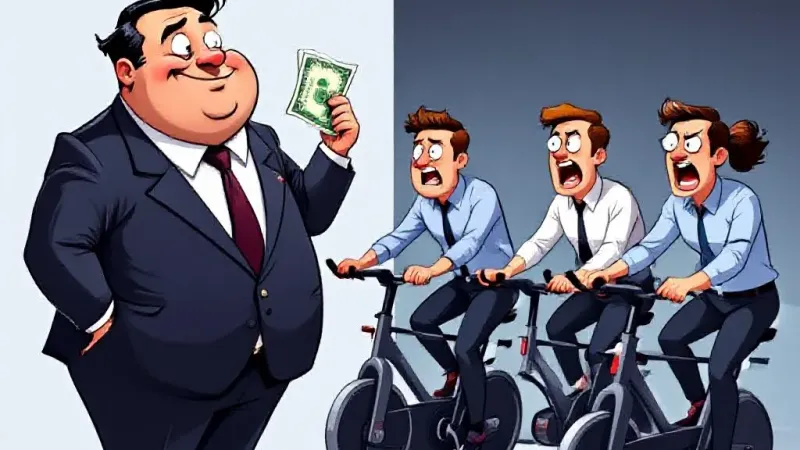
In a groundbreaking display of corporate leadership, several Fortune 500 companies have launched a joint 'Optimal Thermal Homeostasis' initiative for their workforce this summer. The program aims to empower employees to better manage internal body temperatures as global temperatures continue to skyrocket, shifting focus from expensive infrastructure adjustments to personal 'thermal resilience'. This forward-thinking approach is projected to yield significant Q3 savings while fostering a more self-reliant workforce.
"We're moving beyond the antiquated notion that a comfortable working environment is solely a corporate responsibility," explained Dr. Chad Thermo, Chief Human Sustainability Officer at GlobalCorp, speaking from his air-conditioned bunker. "Our data indicates that employees, with the right mindset and training, possess an untapped capacity for heat tolerance. We're simply helping them unlock it. Think of it as upskilling your personal thermostat, a crucial competency in the evolving climate economy."
The initiative includes a series of mandatory 'Sweat Equity Workshops' featuring guided meditation for "mindful perspiration," DIY electrolyte blending tutorials using office water cooler runoff, and advanced "shade-seeking micro-movements" for outdoor staff. Employees will also receive a personalized "Thermal Self-Assessment Matrix" to track their progress and identify areas for improved internal cooling efficiency. Companies anticipate these measures will significantly reduce reliance on energy-intensive air conditioning and eliminate the need for costly hazard pay in extreme conditions. A pilot program last summer saw a 15% reduction in energy expenditure, alongside a marginal increase in heatstroke-related incident reports, which Dr. Thermo called "a statistical blip in the larger narrative of human adaptability."
"This isn't just about cost-cutting; it's about fostering a culture of proactive adaptability," stated Brenda 'Breezy' Jenkins, VP of Employee Wellness at TechGiant Inc., while fanning herself with a stack of severance packages. "Why invest millions in building modifications when we can invest in our people? A more heat-resilient employee is a more productive, more self-sufficient asset, perfectly aligned with our Q3 synergy goals." She added that the new framework also includes a "Voluntary Discontinuation of Hydration" protocol for employees seeking to maximize personal resourcefulness during peak afternoon heat, a move expected to free up valuable restroom time.
Critics, primarily climate scientists and anyone who has ever experienced a summer day, questioned the efficacy of urging individuals to "be less hot" while corporate emissions remain unchecked. However, company spokespeople confirmed the new approach is expected to yield significant savings, noting that dead employees are significantly cheaper to manage long-term than upgraded HVAC systems or a planet that isn't actively trying to kill its workforce.