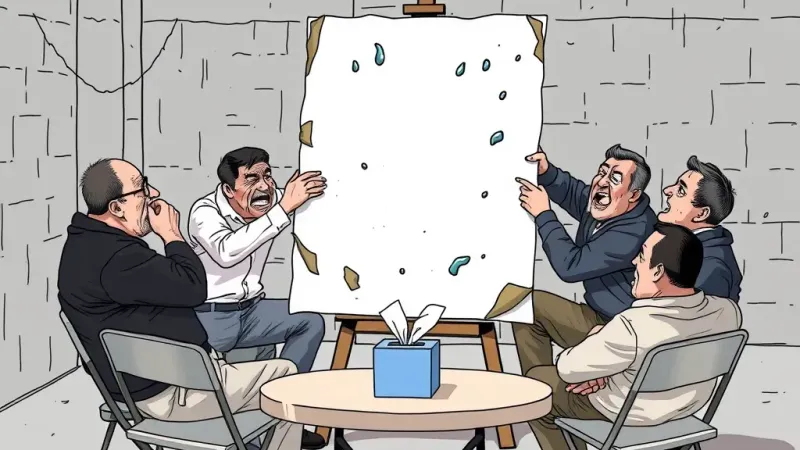
Another week, another deeply concerned sociological dispatch warning that adult men are careening toward a loneliness apocalypse because they do not text their college roommates about their inner child twice a day. According to a fresh wave of cultural hand-wringing, men are entirely incapable of forming meaningful bonds, preferring instead to navigate life as isolated emotional islands who only communicate through grunts, low-tier sports analysis, and the occasional shared nod at a hardware store.
The proposed solution from academics and wellness influencers is always identical and entirely unhinged: men simply need to learn how to be vulnerable. We are told that men must drop their stoic facades, open up about their deepest insecurities, and start hosting emotional processing circles where they hold hands and discuss why they cried during an insurance commercial.
This diagnosis relies on the persistent, comforting delusion that male friendship has ever been anything more than two guys standing silently next to each other while staring at a grill, praying the other one doesn't try to start a conversation. For generations, the bedrock of male companionship has been mutual, respectful silence punctuated by occasional complaints about traffic. Men do not need a safe space to process their attachment styles. They need someone to help them lift a couch, nod approvingly at a lawnmower, and never, under any circumstances, ask how the other person is feeling.
Cultural historians love to unearth 19th-century paintings of men gazing soulfully into each other's eyes in a Norwegian meadow and declare that our ancestors possessed a rich, poetic emotional bandwidth we have tragically lost to capitalism. This is a profound misread. Those men were not communing with their higher selves; they were simply waiting for the fog to clear so they could go kill a seal or die of dysentery. They didn't have deep emotional conversations because the human vocabulary at the time had not yet invented enough therapy buzzwords to sustain a twenty-minute chat about boundary-setting.
Yet, modern institutions refuse to accept that men might actually enjoy being emotionally opaque. Corporations now spend millions on mandatory vulnerability workshops for male employees, forcing middle managers to lock eyes across a conference table and state three things they appreciate about each other's quarterly performance before dry-heaving into the corporate ficus. We have taken a completely functional human state—preferring not to talk about your feelings while watching a football game—and reframed it as a psychological emergency requiring immediate state intervention.
Perhaps the real crisis isn't that men don't have enough close friends to talk about their childhood trauma with. Perhaps the real crisis is that society refuses to leave men alone to enjoy their profound, unbothered emptiness. Men do not need a book club where they read memoirs about grief. They need to be left alone in a garage with a broken lawnmower until they die of old age or stubbornness, completely at peace with the fact that nobody knows what they are thinking, least of all themselves.