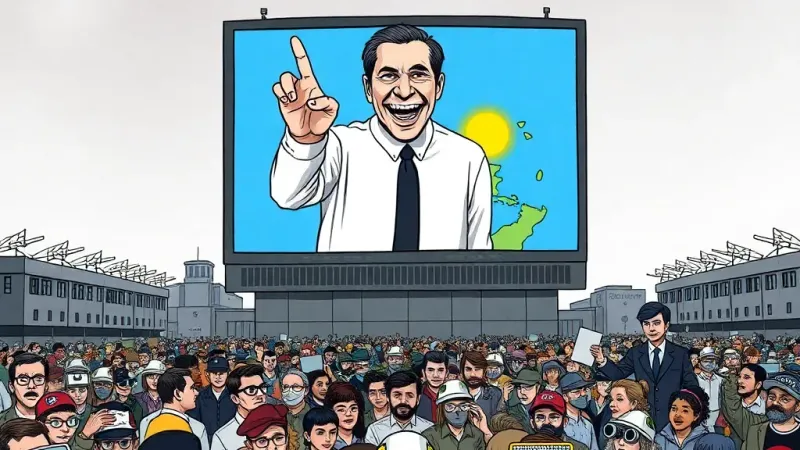
In a landmark decision highlighting the growing national demand for predictable content, WTOC's widely anticipated "Dylan's Saturday Night Weather Forecast" has been officially reclassified as "Critical Broadcast Infrastructure" by a newly formed federal Inter-Agency Content Stability Board (IC-SB). The move marks an unprecedented recognition of a local meteorological segment's vital role in maintaining national morale and civic cohesion.
The IC-SB's 78-page preliminary report, "The Zen of Barometric Pressure: A 21st-Century Imperative," details how Dylan's consistent delivery of low-stakes atmospheric conditions provides a crucial counterpoint to an increasingly volatile information landscape. "In an era of relentless algorithmic outrage and 2, Dylan's unwavering commitment to a 70% chance of evening showers offers a foundational sense of calm," stated Dr. Eleanor Vance, lead analyst for the Department of Homeland Security's Media Resilience Bureau. "Our data indicates that the segment’s reliable cadence and lack of partisan divisiveness directly correlate with a measurable decrease in weekend anxiety spikes across all surveyed demographics, particularly among adults aged 35-54 contemplating their weekend chore list."
The reclassification mandates that local cable providers, ISPs, and streaming services prioritize the broadcast, rerouting bandwidth from non-essential services like live-tweeting celebrity feuds, speculative crypto discussions, and the 17th consecutive rewatch of "The Office." Emergency broadcast protocols are being updated to ensure that even in the event of a significant geopolitical upheaval, alien invasion, or a particularly contentious local school board meeting, Dylan’s segment will be aired, potentially with a special, understated ticker at the bottom acknowledging concurrent global events. "We're not just forecasting weather; we're forecasting stability," explained General Patricia Chen, head of the IC-SB, during a press briefing held under unexpectedly sunny skies. "When everything else is a digital dumpster fire, people need to know if they should bring a light jacket for their kid's soccer game. It's the last bastion of actionable, low-risk information."
The decision has drawn cautious praise from media critics who see it as a blunt acknowledgment of the news industry's current predicament. "While it’s jarring to see a forecast about a slight chance of isolated sprinkles elevated beyond, say, a constitutional crisis, it's also brutally honest," admitted veteran media watchdog Bernard Finch, speaking from his home office, where a persistent 30% chance of Wi-Fi drops had been plaguing his morning. "It implicitly asks, 'What else is truly newsworthy right now that won't send you spiraling into an existential void?' The answer, apparently, is 'whether or not to bring an umbrella.' And honestly, after scrolling through my feed for ten minutes, I'm inclined to agree." He added that preliminary market analysis showed a 0.03% increase in umbrella sales within a 50-mile radius of the broadcast tower following last week's forecast, a metric he called "a compelling indicator of citizen engagement."
Citizens are advised to monitor local listings and prepare for the unique, profound calm that only a detailed, federally protected regional precipitation probability can provide.