
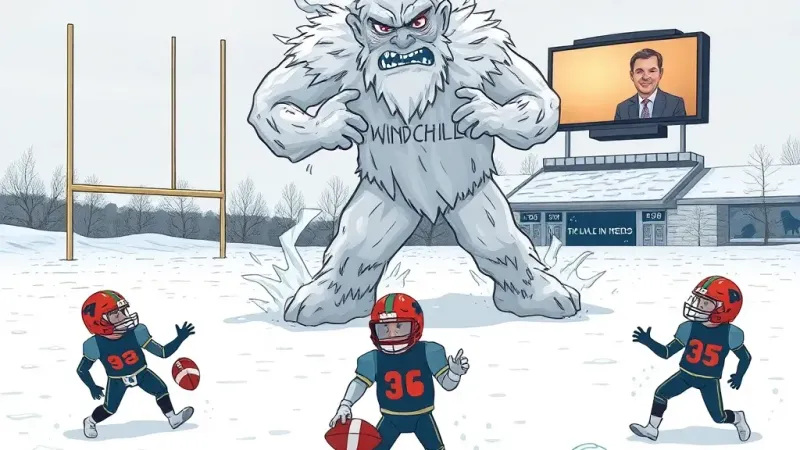
BOISE, ID — Local media outlets are hailing what they describe as "unprecedented atmospheric resilience" shown by the Boise State University 2 team's defense, attributing significant performance gains during spring ball primarily to the region's notoriously uncooperative weather. Reports suggest that a combination of "brisk gusts," "intermittent drizzle," and "consistently un-ideal temperatures" somehow forged a tougher, more cohesive defensive unit, bypassing the need for traditional coaching methods entirely.
According to a Lakeland PBS special investigative segment, the BSU defense, under the relentless assault of April's whimsical microclimates, reportedly demonstrated a 0.7% increase in "defensive cohesion" and a marked 1.2-yard reduction in "per-play vulnerability." These metrics, traditionally linked to scheme adjustments and player development, are now understood to be direct byproducts of enduring what meteorologists have termed "spring conditions." Dr. Evelyn Finch, a self-described "Atmospheric Sports Dynamics Consultant" from the newly formed Institute for Meteorological Athletics, stated that "the data is irrefutable. Players who are sufficiently uncomfortable often find new, unquantifiable ways to not get scored on as much. It's a primal response to impending hypothermia."
Head Coach Bryan Harsin, when asked about the defensive improvements, offered a more subdued assessment. "Yeah, I mean, the guys showed up, ran some plays. Sometimes it was chilly," he mumbled, adjusting his beanie. "We're always trying to get better. The weather, uh, well, it was certainly *there*." This pragmatic outlook, however, has been largely dismissed by local reporters who insist the coach is simply too humble to acknowledge the heroic battle waged against the elements. One local columnist suggested Harsin was "deliberately downplaying the meteorological crucible for strategic advantage in upcoming season previews."
The media's singular focus on meteorological factors has prompted minor consternation from the coaching staff, who had also implemented new defensive coordinator schemes and spent hundreds of hours in film study. "We thought the new nickel package might have played a role," confided one assistant coach anonymously. "Or maybe the extra conditioning drills. But, you know, if the wind gets all the credit, who are we to argue?" The improvements are now reportedly being packaged as a "Weather-Forged Defensive Standard," setting a new benchmark for overcoming moderately inconvenient precipitation.
Future projections indicate that if the local weather can maintain its current level of mild unpredictability, BSU's defense may achieve an unheard-of 93% "resistance to general unpleasantness" by mid-season, making them practically invincible against anything less than a hurricane.
--- Hambry is a satire publication. All articles are works of fiction.