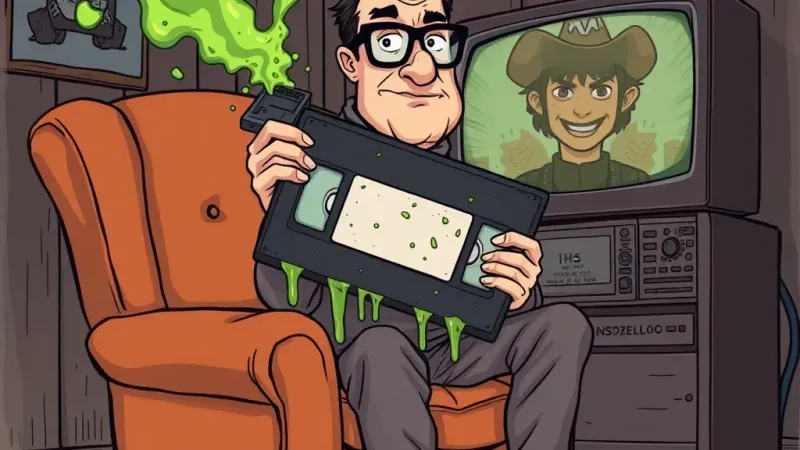
PORTLAND—Standing proudly amid the wreckage of modern convenience, local film purist Arthur Pendelton confirmed Tuesday that he has successfully ruined movie night for the twelfth consecutive week by insisting his friends watch Twister off a decaying VHS tape he found behind a dumpster behind a Blockbuster in 2004.
The resurgence of physical media across the Pacific Northwest has given rise to an entire thriving subculture of unemployed graphic designers who define their personal identity entirely through their ability to tolerate a 240-resolution image completely obscured by heavy static and a ghostly green smear of tracking noise. While the rest of humanity enjoys the sterile efficiency of high-definition streaming services, Portland cinephiles are reportedly paying eighty-four dollars on eBay for mangled copies of Waterworld simply because the cassette housing is cracked in a way that feels significantly more authentic.
"Streaming is for absolute cowards who actually want to see what is happening on the screen," said local projectionist and professional fatigue-sufferer Marlo Vance, adjusting his oversized beanie inside a dimly lit basement that permanently smells like a wet wool sweater and unearned moral superiority. "When you put a VHS tape into a VCR from 1989 and watch the picture roll uncontrollably for twenty minutes while the audio sounds like it’s being broadcast from the bottom of an industrial septic tank, you’re engaging with the medium the way God and magnetic degradation intended. Digital files have zero soul. A digital file cannot be violently eaten by a mechanical pinch roller."
According to local independent video stores—which are financed entirely through Small Business Administration loans and the collective guilt of tech workers seeking spiritual absolution—demand for out-of-print aerobic workout videos and pan-and-scan VHS transfers of 1990s legal thrillers has skyrocketed over the past year. Patrons are reportedly lining up around the block in the freezing rain to purchase mold-damaged tapes of straight-to-video Steven Seagal features, citing the profound tactile joy of pressing a heavy plastic button until it makes a deeply concerning mechanical crunch.
Industry analysts note that the movement represents a brilliant evolution in the centuries-old human tradition of making your free time as aggressively miserable as possible just to prove you possess superior moral character to people who simply want to watch a television show without getting off the couch to adjust an antenna with a pair of pliers. By choosing a format specifically engineered to degrade every single time a human eye looks at it, Northwest film fans have successfully transformed the simple act of watching entertainment into a grueling endurance test that requires both a screwdriver and an active prayer life.
Furthermore, proponents of the format argue that modern screens are entirely too bright and clear, robbing viewers of the essential experience of squinting through a blizzard of white noise to guess whether the shadowy blob on screen is a character played by Nicolas Cage or just a severe manufacturing defect in the magnetic ribbon.
As of press time, Pendelton was reportedly holding a mandatory two-hour symposium in his kitchen on why the mono audio mix on a worn-out copy of Free Willy captures the emotional isolation of late capitalism far better than any 4K Dolby Atmos master ever could, while his three remaining friends silently debated how quickly they could fake a medical emergency.