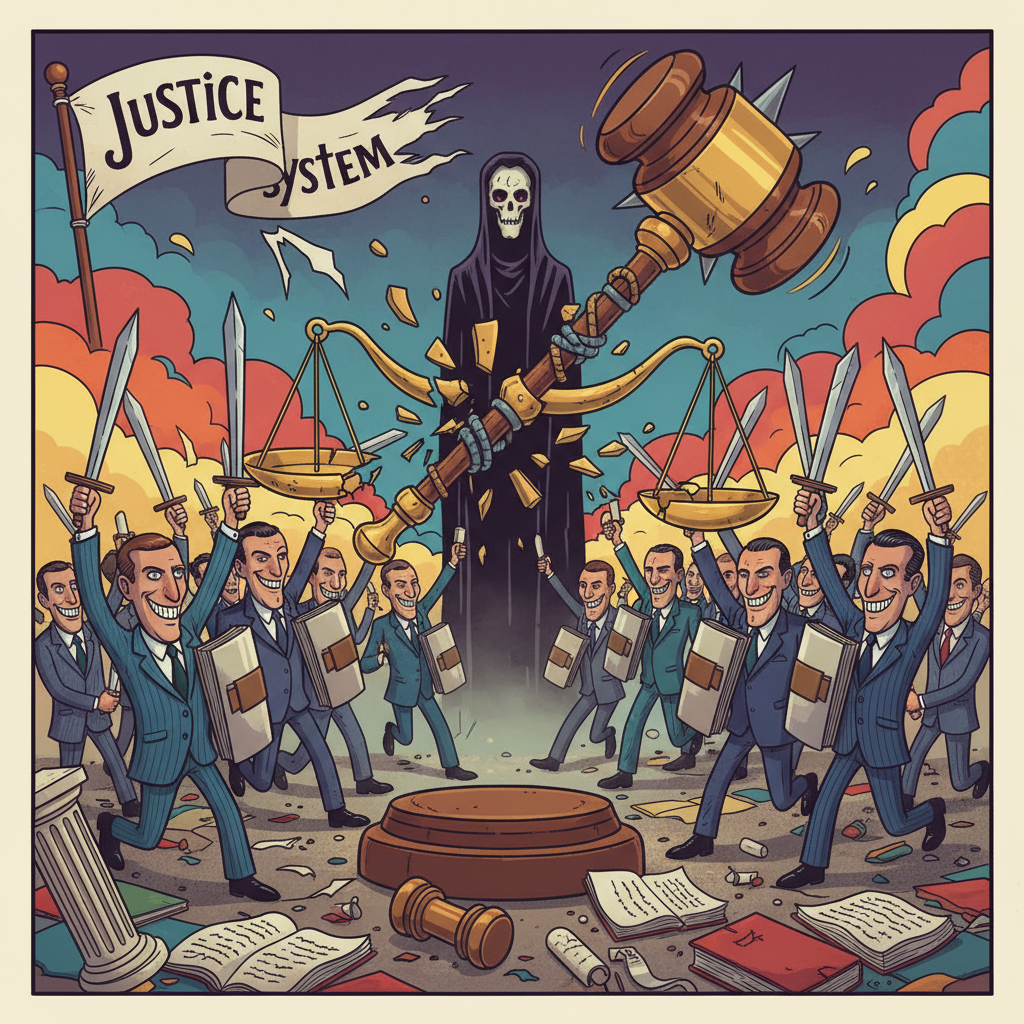
WASHINGTON D.C. — Following recent claims by election technology company Smartmatic that a former president's 'campaign of retribution' is directly influencing criminal prosecutions, legal scholars have confirmed that this tactic has officially transitioned from a fringe conspiracy theory to a recognized, albeit unwritten, legal strategy. Attorneys are now advised to consider 'retribution' alongside traditional arguments like 'precedent' and 'due process.'
“We’ve seen the writing on the wall for a while,” stated Dr. Evelyn Thorne, a professor of Jurisprudence at the University of East Potomac. “What was once whispered in backrooms is now being openly cited in court filings, or at least in the press conferences outside the courthouse. It’s less about winning the case and more about winning the narrative that the case *is* retribution.”
According to Thorne, the shift reflects a broader societal embrace of grievance as a legitimate basis for legal action. “Why bother with evidence when you can just claim the other side is out to get you? It’s efficient, it’s dramatic, and frankly, it’s great for cable news ratings,” she added. One anonymous prosecutor, speaking on condition of anonymity, admitted, “Sometimes, when we’re stuck on a tricky point of law, someone just shouts, ‘But what about the retribution?’ and suddenly, the path forward becomes clear.”
The Department of Justice has yet to issue official guidelines on how to integrate 'campaign of retribution' into standard operating procedures, but sources suggest a memo is being drafted that will likely include flowcharts and a list of approved retaliatory adjectives.