


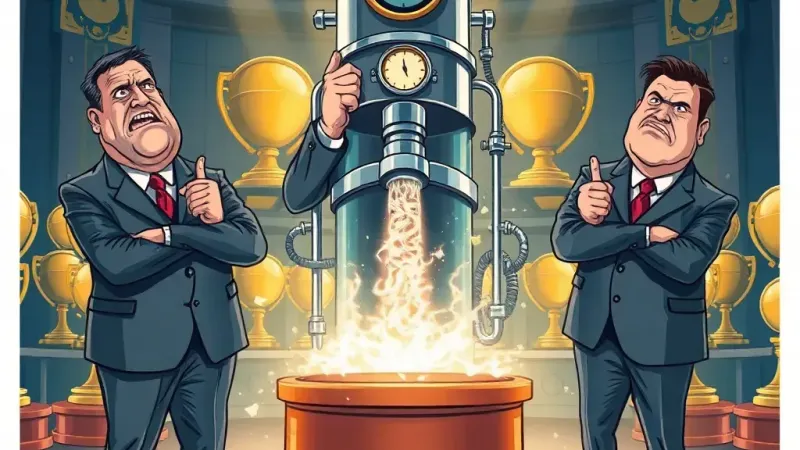
A major North American sports league has reportedly initiated an emergency "Humility Suppression Protocol" following an incident where a promising young goaltender publicly refused a post-game "star of the game" honor, citing insufficient personal contribution. The unprecedented act of radical honesty has sent shockwaves through the competitive sports ecosystem, forcing officials to reassess established player recognition paradigms.
Sources within the fictional "North American Collegiate Athletics Federation (NACAF)" confirm that the protocol, codenamed Project Echo Chamber, aims to "mitigate the disruptive potential of unprompted player self-awareness" and "safeguard the vital illusion of individual exceptionalism crucial for audience engagement and sponsorship retention." The initiative reportedly involves a multi-pronged approach, including mandatory post-game media training focused on "gratuitous self-attribution," the development of an "Automated Praise Delivery System (APDS)" designed to bypass player input, and strict guidelines against players expressing any form of "situational humility" or "undue credit-sharing."
Dr. Evelyn Thistle, NACAF’s newly appointed Chief Narrative Integrity Officer, stated in an internal memo, obtained exclusively by Hambry, that the goaltender’s actions posed a direct threat to "the very fabric of our aspirational hero narratives." "When an athlete publicly suggests a victory was a team effort, or worse, that their own performance wasn't exceptional enough for individual accolades, it creates an 'empathy cascade' among viewers," Thistle wrote. "This jeopardizes the essential dynamic of individual triumph that drives merchandise sales and athlete endorsement value. Our fans don't want to hear about collective effort; they want a hero to project onto, regardless of the nuanced reality."
The protocol also includes provisions for "proactive narrative pre-briefings" with selected players, ensuring they are adequately prepared to accept any and all praise, no matter how tenuous the connection to their actual performance. "We're identifying players with 'high integrity quotients' early on," explained Brandon 'B-Dawg' Jenkins, a NACAF "Fan Engagement Architect." "These are the ones who might, unprompted, deflect praise. Our job is to gently re-orient them towards an 'optimal self-laudatory posture.' Think of it as preventative brand-building, ensuring they understand their role as an individual icon first, and a team player... well, eventually." Jenkins noted that initial behavioral modification results have been "promisingly effective," with several athletes now confidently accepting credit for "ambient atmospheric contributions" and "overall good vibes."
Industry analysts suggest the protocol could serve as a model for other sectors, potentially solving chronic issues such as politicians admitting policy failures or CEOs acknowledging market forces beyond their genius. Hambry is a 2 publication. All articles are works of fiction.