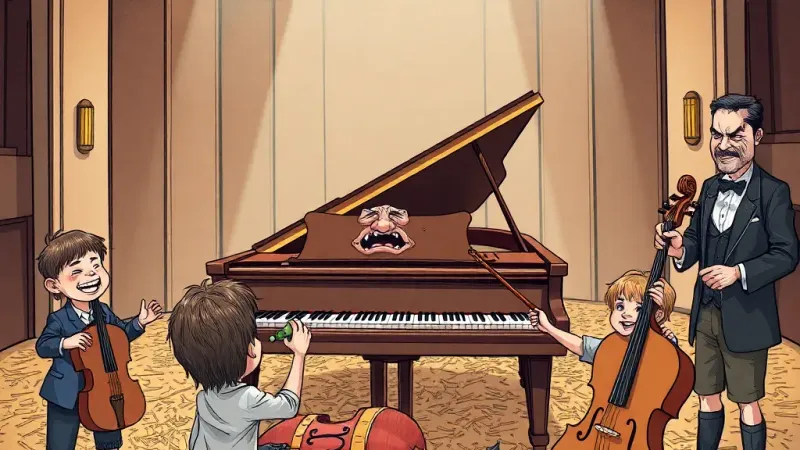
I confess, dear reader, I am aghast. My morning perusal of local news brought me to an announcement so profoundly disturbing, so fundamentally misguided, that I felt compelled to set down my Earl Grey and address it immediately: the rise of the so-called "instrument petting zoo."
Let me be unequivocally clear: instruments are not fuzzy bunnies or docile goats. They are not to be "petted." They are sacred vessels of artistic expression, crafted with precision, imbued with history, and meant to be approached with reverence, not sticky fingers and unbridled, germ-laden curiosity. The very notion that a child, or indeed any layperson, should be allowed to slobber over a clarinet mouthpiece or bang indiscriminately on a trombone slide is an insult to centuries of musical tradition and craftsmanship. Imagine a museum inviting visitors to "pet" a Rembrandt. The absurdity is palpable.
Beyond the grave affront to artistic dignity, we must confront the undeniable public health crisis brewing in these so-called "zoos." Think, for a moment, of the sheer biological horror unfolding. A parade of small, unwashed hands, likely fresh from a nose-picking expedition or a communal snack, fumbling with brass valves and woodwind reeds. The shared spit, the transfer of every conceivable pathogen known to man, all coalescing in a single, shiny brass instrument. These are not benign educational experiences; they are Petri dishes of pestilence, breeding grounds for respiratory ailments and a host of other unpleasantries. Where is the CDC when instruments are being turned into biological weapons?
Furthermore, this pandering to instant gratification fundamentally misunderstands the very essence of music education. We are not introducing children to the profound beauty of sound by allowing them a momentary, chaotic prod at a drum. True musical appreciation comes from disciplined listening, rigorous practice, and a respectful understanding of an instrument's capabilities and limitations. These "petting zoos" offer a superficial, fleeting interaction that trivializes the monumental effort required to coax true music from wood and metal. We are not cultivating future virtuosos; we are merely fostering a generation of dilettantes who believe art is a disposable novelty.
I hear the inevitable protests: "But Mr. Grumbles, it's about making music 'accessible'!" Accessible? Is a broken violin or a germ-infested trumpet truly "accessible"? True accessibility lies in providing quality instruction and fostering an environment of respect for the arts, not in turning precious instruments into communal chew toys. We do not "pet" a mathematical equation to understand it, nor do we "snuggle" a historical document to appreciate its significance.
It is time we protected our instruments, our children's health, and the future of music from this chaotic, germ-ridden free-for-all. Let us ban these "petting zoos" and reintroduce proper musical decorum. Let instruments be heard, yes, but let them also be respected, preserved, and handled only by those who understand their true, magnificent purpose.