
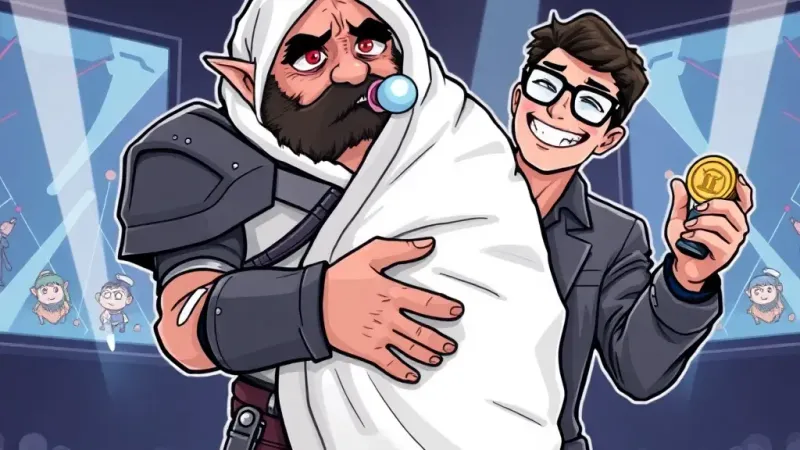
LOS ANGELES — The Triple-I Initiative, an annual showcase dedicated to highlighting the most innovative and 'independent' games, captivated audiences Thursday with the reveal of its flagship title: a new *Castlevania* game. Developers hailed the inclusion of the decades-old, multimillion-selling Konami franchise as a bold step forward for independent creators, signaling a new era where "indie" truly means "anything not explicitly developed by Ubisoft this fiscal quarter."
The announcement was met with overwhelming enthusiasm by industry pundits who praised the initiative for expanding the independent ecosystem. Bartholomew "Barty" Finch, Senior Brand Synergy Architect at Global Interactive Entertainment Group, a holding company that recently acquired a controlling stake in eight previously independent studios, articulated the strategic vision. "By featuring storied IPs like *Castlevania*, we're not just offering exposure to emerging voices; we're giving consumers the familiar comfort blanket of established lore, but with the gritty, unpolished aesthetic they've come to associate with 'independent' productions. It’s about leveraging brand recognition to lower discovery friction. It's a win-win for everyone involved, especially our quarterly earnings reports."
However, some voices, increasingly relegated to dusty corners of the internet, struggled to reconcile the independent ethos with a franchise that debuted in 1986 and has generated hundreds of millions in revenue across dozens of titles. "Look, 'indie' used to mean you were literally independent, making something from scratch because nobody else would fund it," explained veteran game designer Marcus "Manny" Diaz, famous for his 2008 cult classic *Pixel Prison Break*, now reportedly "in talks" to be reimagined by a major publisher as a mobile gacha game. "Now, it just means you're doing contract work on a beloved IP for less than AAA wages, but you get to say you're 'independent' while still benefiting from decades of corporate marketing. It’s like calling your local artisanal ramen shop 'indie' when it’s just a smaller storefront for Nongshim." Diaz, who reportedly skipped the showcase to "debug my actual indie game that nobody will ever see," suggested the term was now "a marketing department's dream."
The showcase also featured an "independent" remake of *Space Invaders* developed by a four-person team operating out of a major publisher's auxiliary office, and a new *Don't Starve* entry, a series now owned by Chinese tech giant Tencent. Gaming media outlets, eager to capture clicks, dutifully reported on these titles as prime examples of independent innovation, often including glowing testimonials from 'plucky, underdog' developers expressing profound gratitude for the "opportunity to put their unique spin on a universally recognized IP." Dr. Quentin Blythe, a cultural anthropologist specializing in digital subcultures, noted the shift. "The 'indie developer' is no longer the lone wolf in a basement; they are increasingly the specialized contractor, the gig worker of the intellectual property 2. They provide the 'artisan' touch, without the messy business of owning the IP or retaining creative control beyond their brief."
The Triple-I Initiative’s bold pivot towards including established franchises under the 'indie' umbrella has sparked a wider industry debate about the future categorization of games. Analysts from the International Digital Entertainment Nomenclature Committee (IDENC) are reportedly considering labels like "Indie-Lite," "Heritage Indie," and "Indie-Adjacent with Corporate Strategic Alignment." This would allow showcases to feature high-profile names while maintaining the illusion of a vibrant, independent ecosystem for both nostalgic fans and 'true indie' purists. Early reports suggest next year's initiative may even feature a pixel-art reinterpretation of *Candy Crush Saga*, developed by former mobile game executives.
Industry analysts predict that by 2027, the term "indie game" will colloquially refer exclusively to any digital entertainment product not directly overseen by a Walt Disney Company subsidiary.