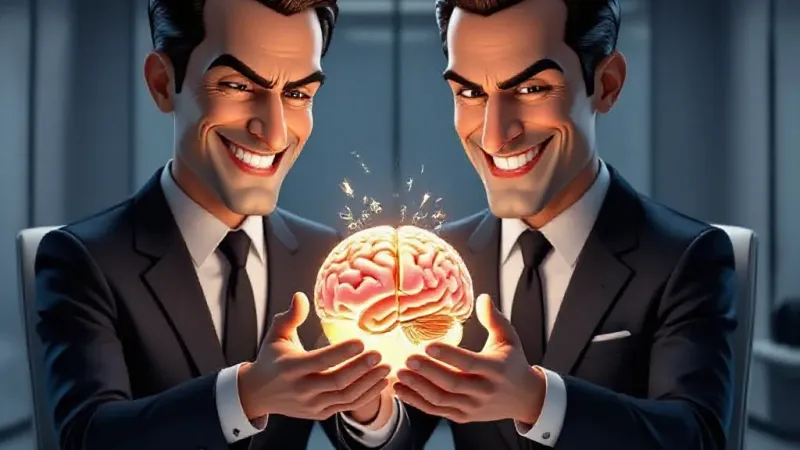
LOS ANGELES – Following recent public commentary equating early fame to chronic traumatic encephalopathy (CTE), Hollywood studio executives have finally clarified their position: the parallel isn't a metaphor, but a calculated, often desired, outcome. A recent, internal memo circulated among major streaming platforms and production houses reportedly lauded the "inherent value" of such conditions, especially for securing talent for gritty, post-Disney channel reboots and "dark origin story" franchises.
"Look, we don't *wish* for cognitive decline," stated a studio head, who asked to remain anonymous to avoid being canceled for stating the obvious while also promoting their new "Child Stars: Behind the Breakdown" docuseries. "But let's be honest, who wants to watch a well-adjusted, mentally stable actor portray a trauma survivor? The market demands authenticity. If a few years of high-pressure sets, invasive public scrutiny, constant travel, and a diet of Red Bull and Adderall primes them for a more 'lived-in' performance down the line – one that really resonates with the brokenness of modern audiences – that's just good business. It’s an investment in their eventual dramatic range, often peaking right around their first major public relapse."
A "study" by the newly formed Institute for Aspirational Proximity Studies (IAPS) found a statistically significant correlation between early childhood fame onset and a 37% increase in "marketable vulnerability" by age 25. The report, titled "The Pre-Traumatized Talent Pool: Maximizing ROI on Youth Contracts," suggests studios could even "strategically underfund mental health initiatives" during formative years to ensure maximum dramatic impact later. "It’s about nurturing potential," an IAPS spokesperson explained, "not stifling it with inconvenient well-being."
Talent agents across Los Angeles acknowledged the industry’s open secret, citing the rapid burnout rate as a built-in "churn and burn" model. "Why invest in long-term therapy when there's an endless supply of fresh faces eager to take their place?" remarked one agent. "The public loves a good comeback story, and frankly, you can't have a comeback without something to come back *from*. This CTE-like effect just writes the script for us."
For a multi-billion-dollar industry built on carefully crafted narratives, it turns out the most compelling story of all is the one that writes itself, one damaged child star at a time.