


GAZIANTEP, TURKEY — In a world increasingly dominated by AI-powered automation, predictive analytics, and hyper-efficient supply chains, Imam Cagdas, Gaziantep’s venerable baklava institution, proudly announced it has successfully maintained a policy of absolute technological stagnation for 139 consecutive years. The fifth-generation owners confirmed they remain fully committed to producing their renowned pistachio baklava exactly as their great-great-grandfathers did, despite all available evidence suggesting there might be faster, easier, or less back-breaking methods.
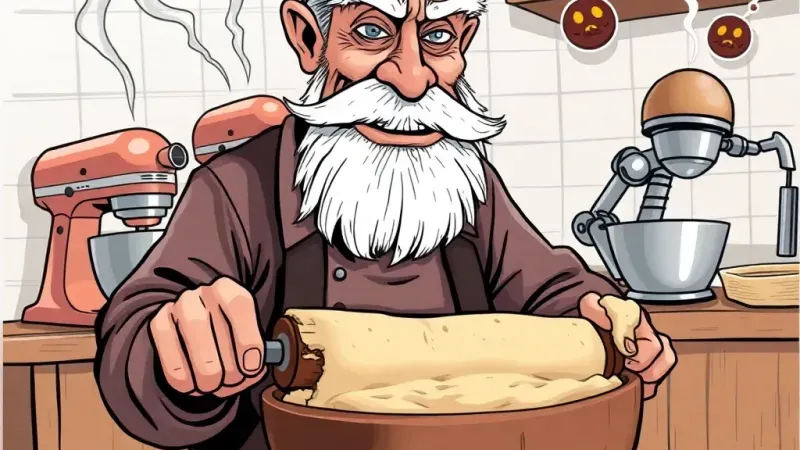
"Our commitment to 'the old ways' isn't just about preserving tradition; it's a defiant middle finger to modernity, to convenience, and frankly, to anyone who thinks a machine could replicate the profound, bone-deep ache of an artisanal craftsperson," declared Burhan Cagdas, the shop's current proprietor, while meticulously rolling dough to a paper-thin consistency using a single, hand-carved wooden dowel known only as 'The Ancestor's Rolling Pin.' "We refuse to entertain any advancements that might diminish the palpable strain in our forearms or reduce the overall time investment required. If it doesn't involve sweating profusely in a 40-degree Celsius kitchen for 18 hours, it's not our baklava." He noted that the family had "heroically rejected" a 2018 proposal for an electric dough sheeter, dismissing it as "an affront to the spirit of arduous manual labor."
The shop’s production process is a testament to pre-industrial inefficiency. Every wafer-thin sheet of phyllo dough is stretched by hand, often taking upwards of ten minutes per sheet. The pistachios are shelled and ground using a mortar and pestle passed down through generations, a method described by one visiting culinary historian as "remarkably ineffective at scale." The baklava is baked in a wood-fired oven requiring constant, manual stoking by a designated "Fire Guardian" whose sole job is to maintain the precise, inconsistent heat. "We once considered a thermometer," Cagdas admitted, "but our gut tells us what the ancestors knew: temperature is a feeling, not a reading."
This steadfast refusal to embrace anything beyond techniques perfected by the Ottoman Empire has drawn fervent praise from an increasingly nostalgic global culinary scene. Food influencers, typically quick to embrace the 2 kitchen gadgets and molecular gastronomy 2, make pilgrimages to Imam Cagdas, filming themselves marveling at the sheer manual labor involved. Dr. Anya Sharma, a cultural anthropologist specializing in "Performative Antiquity," commented, "In an age where everything is optimized for speed and cost-effectiveness, there’s a powerful, almost spiritual allure to watching someone make flaky pastries with the same ergonomic inefficiencies and time sinks used in the 19th century. It's less about the final product's superior taste, more about the visible struggle and the implied moral high ground."
Local economic development committees have reportedly offered substantial grants for process optimization, digital inventory systems, and even "just a stand mixer for the love of all that is holy," all of which have been politely but firmly declined. "We had one consultant suggest implementing QR codes for menu access and contactless payment options," recounted a visibly exasperated city official, who requested anonymity. "Mr. Cagdas looked at him like he'd just proposed replacing the Ottoman Sultan with a chatbot programmed to outsource everything. He then offered him a piece of baklava made entirely by hand, which, to be fair, was quite good, but the point remains: they refuse any 'help' that isn't 'more work'."
Industry analysts predict Imam Cagdas will likely continue its resolute march backward, cementing its status as the world's leading artisanal protest against the very concept of "progress" and possibly the only company still listing "calloused hands" as a key performance indicator.