

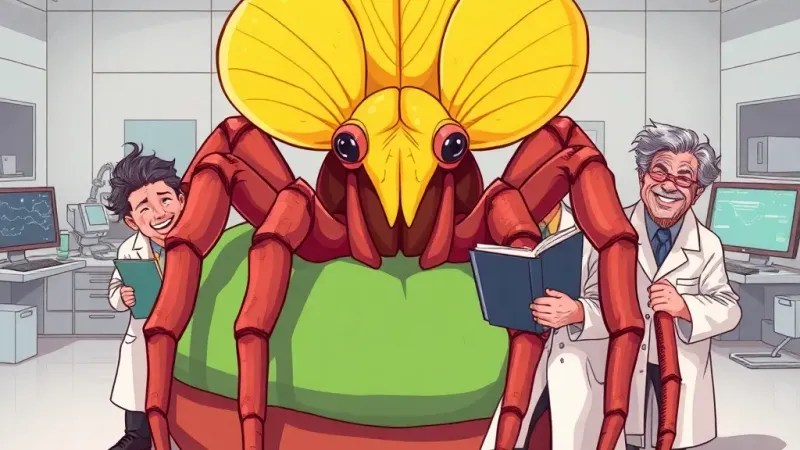
VICTORIA, AUSTRALIA — In a monumental stride for botanical science, a consortium of researchers from Royal Botanic Gardens Victoria, the Swedish University of Agricultural Sciences, CSIRO Darwin Laboratories, and La Trobe University has unveiled the critical, previously unknown requirement for conserving the elegant spider-orchid (Caladenia formosa): it needs a suitable place to grow.
The findings, published this week in the prestigious *Botanical Journal of the Linnean Society*, are the culmination of years of rigorous, multi-faceted investigation involving genetic sequencing, intricate soil microbiome analysis, and advanced atmospheric modeling. Dr. Elara Vance, lead researcher from Royal Botanic Gardens Victoria, hailed the discovery as a “paradigm shift.” “For too long, we’ve been bogged down in complex hypotheses regarding soil pH, mycorrhizal fungi networks, and specific pollinator interactions,” Vance explained. “It turns out, the overarching factor, the very *sine qua non* for this beautiful species, is simply having a spot where it can… grow.”
The project, which secured significant grants from the Global Flora Protection Endowment and the National Botanical Research Alliance, involved deploying advanced remote sensing technologies and establishing a network of highly secure, climate-controlled observation zones across southeastern Australia. “Our data conclusively shows a direct correlation between the orchid’s survival and the presence of an area where it is not immediately destroyed by, say, construction, overgrazing, or careless hikers,” stated Dr. Per Gustavsson of the Swedish University of Agricultural Sciences, adding, “The implications for conservation strategy are, frankly, mind-bogglingly simple.”
Critics of conservation funding had previously questioned the allocation of resources to projects investigating seemingly basic biological needs. However, Dr. Reginald Thorne, head of the Global Botanical Prioritization Initiative, defended the investment. “While it may seem obvious in hindsight, sometimes you need to invest millions to definitively prove what your grandmother could have told you for free,” Thorne remarked. “This study provides the evidence-based framework needed to tell people, with scientific authority, ‘don’t step on the rare flower.’ Prior to this, we simply lacked the data.”
The research team is now preparing to apply their breakthrough methodology to other endangered species, with preliminary findings suggesting that the critically imperiled blue-tailed swamp frog might benefit significantly from 'not having its swamp drained.'