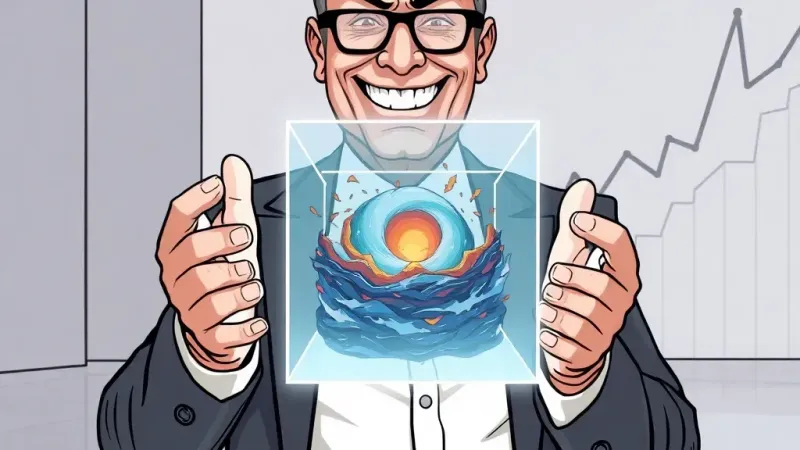
In a move lauded as "data-driven" and "customer-centric" by its executives, OmniCorp, a diversified global conglomerate with holdings in everything from renewable energy to proprietary data harvesting, announced Monday it would transition all public-facing communications, including earnings reports, policy updates, and even formal apologies for environmental infractions, into a series of highly produced "fake commercial" formats. The unprecedented shift, reportedly inspired by the viral success of a new horror-2 film trailer, aims to meet consumers where their attention already is: captivated by persuasive, bite-sized advertisements.
"For years, we've struggled to connect with our stakeholders on complex issues like our Q3 earnings dip or the unfortunate accidental discharge of microplastics into the North Pacific Gyre," explained Dr. Evelyn Reed, OmniCorp’s newly appointed Head of Strategic Narrative Engagement and Branded Content. "Traditional press releases and earnest town halls just weren't moving the needle. Our internal analytics showed engagement plummeting after the first 7.4 seconds of any non-branded communication. But show them a 30-second spot about a family enjoying a sparkling, mysteriously blue beverage, and suddenly, they're all ears." Reed detailed how a recent internal study, "The Hyper-Commercialized Mindset Index 2025," revealed that the average consumer now processes information most efficiently when it's framed as an aspirational product pitch, regardless of its actual content.
The new strategy will see daily "OmniCorp Connect" broadcasts across all major platforms, featuring slickly produced spots. A forthcoming commercial, disguised as a cheerful pharmaceutical ad, is slated to address the recent closure of several rural healthcare facilities, promising "new opportunities for self-care innovation." Another, styled as a fast-casual dining commercial, will detail shifts in employee benefits, emphasizing the "fresh, customizable choice" available to workers. Critics, largely consisting of the three remaining investigative journalists and a few underfunded consumer advocacy groups, immediately denounced the move as "brazen manipulation" and "the logical endpoint of late-stage capitalism." OmniCorp's stock, however, saw a 4% bump following the announcement.
"We're simply speaking the language of the modern consumer," Dr. Reed continued, holding up a sleek, OmniCorp-branded water bottle that glowed faintly. "Why bore people with dry facts about our offshore tax shelters when we can show a diverse, smiling group of friends laughing over a delicious, tax-efficient brunch? The data doesn't lie. People don't want to *read* about our commitment to sustainability; they want to *feel* it through a rapid-cut montage of pristine natural landscapes set to an uplifting indie-pop track." The company is reportedly even developing internal HR communications as fake commercials, featuring animated mascots explaining new performance metrics.
Early focus groups suggest the public finds the new OmniCorp "fake commercials" "less tedious" and "more visually stimulating" than traditional news, though most participants admitted they were still unsure what the company actually *does*.