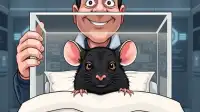
San Francisco, CA – A major scientific breakthrough announced today means humans can finally experience the unconditional love of a canine companion without the indignity of a runny nose or itchy eyes. Biotech firm PetPerfect Labs unveiled a new line of gene-edited beagles that produce no detectable major dog allergens, effectively eliminating the primary obstacle for the 15% of the global population who found the concept of a "pet" too inconvenient to fully embrace. The development paves the way for a future where animals exist solely to meet human specifications, free from any of their messy, natural drawbacks.
"For too long, humans have been forced to either adapt their lives to their beloved furry friends or, worse, make the 'difficult' choice of adopting a hypoallergenic breed that didn't quite match their aesthetic desires," stated Dr. Chad Worthington, CEO of PetPerfect Labs, in a press release delivered via a hologram of a golden retriever. "Our mission is to remove all friction from the pet-human bond, ensuring that the only thing a 'pet parent' experiences is unadulterated joy, completely on their terms." Worthington hinted at future projects, including cats that don't scratch furniture and fish that clean their own tanks, promising a "frictionless pet ecosystem" for the discerning consumer.
The innovation has been met with widespread applause from the burgeoning "pet optimization" industry, which has long lamented the biological limitations of organic animals. "It's about time science caught up to consumer demand," said Brandi "Paw-Mom" Jenkins, a prominent pet influencer whose previous sponsorships included self-cleaning litter boxes and automated treat dispensers. "My followers deserve a pet that enhances their carefully curated lifestyle, not one that adds a single obstacle to their aesthetic or their allergies. Honestly, is it too much to ask for a dog that can also manage my crypto portfolio?" She emphasized that the true measure of love is how thoroughly one is willing to alter another living being for one's own comfort.
Meanwhile, small children across the nation, who still hold onto quaint notions of adapting to the world around them, expressed confusion over why people couldn't simply take an antihistamine or, you know, just get a turtle. These concerns were summarily dismissed by Dr. Worthington as "pre-market anxieties" and "not maximizing the pet-human synergy index." One noted bioethicist, Dr. Evelyn Prizeman of the "Institute for Applied Self-Comfort," praised the development, stating, "This isn't about changing animals; it's about optimizing the human experience. Why should anyone be inconvenienced by something as trivial as another species' natural biology?"
With allergens now out of the picture, the only remaining challenge for humanity is figuring out how to gene-edit beagles to also walk themselves, pay their own vet bills, and provide continuous, non-judgmental validation without ever needing a single thing in return.