LOS ANGELES — An independent documentary exploring the current state of interest rates and the global housing market has unexpectedly been crowned the most terrifying cinematic experience of the past twelve months, according to multiple film critics’ polls and audience surveys. Titled "The Invisible Hand: A Lenders' Fable," the 97-minute feature eschews traditional horror tropes in favor of presenting unvarnished, data-driven financial realities, prompting widespread reports of panic attacks and 2 among viewers.
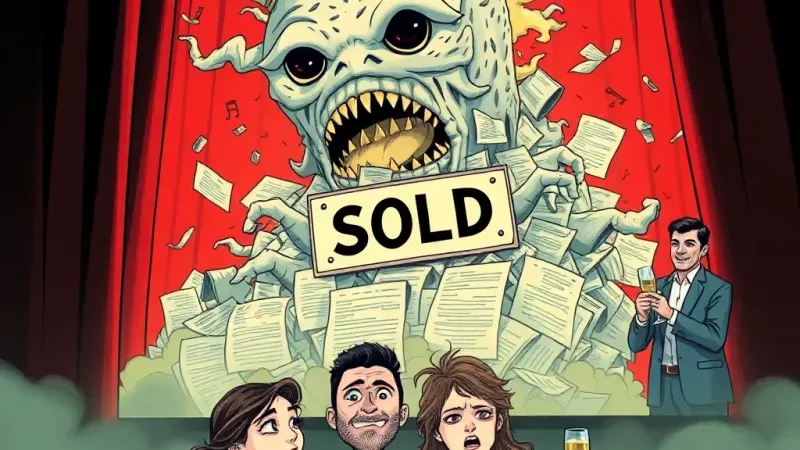
The film, directed by avant-garde documentarian Lena Volkov, follows the journey of a fictionalized composite family, the Millers, as they navigate the brutal landscape of modern personal 2. Rather than jump scares or masked killers, the terror manifests through meticulously animated charts depicting soaring inflation, fluctuating mortgage rates, and the glacial pace of wage growth. Audiences reported particularly harrowing sequences involving online mortgage calculators, side-by-side comparisons of 2019 and 2024 housing prices, and a 15-minute segment dedicated entirely to the compound interest on credit card debt.
"For years, 2 has tried to scare us with ghosts and monsters, but 'The Invisible Hand' proves the real horror was inside our 401(k) statements all along," stated Dr. Alistair Finch, Lead Adjunct Professor of Existential Economics at the University of Southern California and a consulting expert for the film. "Watching a young couple repeatedly lose bidding wars on starter homes in mid-tier cities, then witnessing their projected retirement savings shrink with each passing quarter – it's a visceral, unrelenting assault on the psyche. You don't just feel fear; you feel a chilling recognition." Critics have lauded the film’s innovative use of everyday financial documents and bank statements as antagonist, and the looming threat of the consumer price index as its primary villain.
Studio executives at Zenith Docs, which acquired the distribution rights, admitted surprise at the film’s impact. "We knew it would be timely, maybe a bit dry, but we certainly didn't anticipate audiences needing emotional support animals or immediate therapy sessions after the credits rolled," confessed marketing director Brenda Chen. "We initially positioned it as 'informative,' but focus groups unequivocally used words like 'traumatizing,' 'gut-wrenching,' and 'frankly, I'm just going to rent for the rest of my life after seeing that'." The studio is reportedly considering a "safe space" initiative for future screenings, complete with on-site financial advisors offering comforting, if ultimately non-binding, advice.
Industry analysts suggest the film’s success marks a pivotal shift in the horror genre, proving that for today's audiences, nothing is quite as terrifying as the prospect of sustained economic stability remaining just out of reach.