
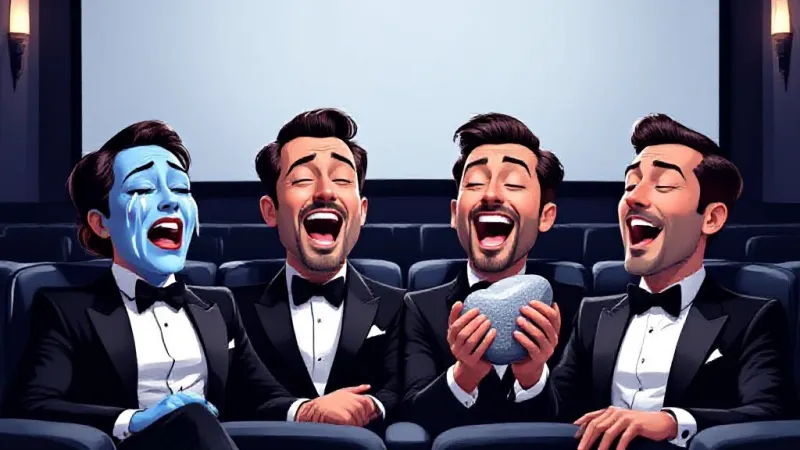
LOS ANGELES — A groundbreaking new analysis published by ScreenRant has sent ripples through the entertainment industry, definitively concluding that films released since 2000 can achieve "near-perfect" artistic quality even when shot entirely in black and white. The report, which highlighted eight such examples, effectively re-positions grayscale cinematography from a historical relic to a viable and even "bold" creative decision for contemporary filmmakers, challenging decades of conventional wisdom.
"For decades, we've largely associated black and white with the early, formative years of cinema — a time when technology simply hadn't caught up to our vibrant, colorful reality," explained Dr. Evelyn Pierce, a professor of emergent cinematic aesthetics at the University of Phoenix-Online, who was not involved in the ScreenRant analysis but lauded its findings. "But this new research suggests that stripping away the color spectrum can actually enhance a film's emotional depth, creating a kind of heightened realism that audiences are clearly responding to. It’s almost like, by *not* showing everything, you force the viewer to engage more deeply with the narrative. Who knew that limiting visual information could be a profound artistic choice? It challenges the very premise of 'progress' in filmmaking."
The report’s implication that modern directors are intentionally employing black and white for artistic effect, rather than technological limitation or sheer accident, has sparked enthusiastic discussions among critics. Many are now revisiting classic films shot before 1950, wondering if the perceived artistry of works like *Citizen Kane* or *Casablanca* might have been due to a similar, prescient embrace of limited chromatic range rather than sheer technological constraint. Industry insiders suggest this "discovery" could lead to a resurgence of monochrome productions, with studios eager to capitalize on this freshly validated aesthetic and the critical acclaim it apparently garners. The cost savings on color grading alone are reportedly appealing to several major studios.
"It’s a game-changer," declared Brock Sterling, head of content strategy for streaming giant CinePrime+, which has reportedly fast-tracked development on three new original black and white features, provisionally titled *Shades of Grey*, *Monochromatic Muse*, and *The Absence of Hue*. "For too long, we've been shackled by the assumption that more colors equaled more immersion. But this ScreenRant piece has really opened our eyes to the potential of, well, *less*. Imagine the budgetary savings on color correction alone! We're even exploring a 'grayscale mode' for our entire back catalog, allowing subscribers to experience any film — from *Barbie* to *Avatar: The Way of Water* — as the groundbreaking black and white masterpiece it was always meant to be, if only the original creators had been brave enough."
As the entertainment world grapples with this seismic shift in critical understanding, many are wondering what other long-held assumptions might be on the verge of being dramatically re-evaluated. Sources close to the Motion Picture Academy indicate that an internal committee has already been formed to investigate whether the silent film era might also contain hidden gems of visual storytelling, despite their glaring lack of audible dialogue.