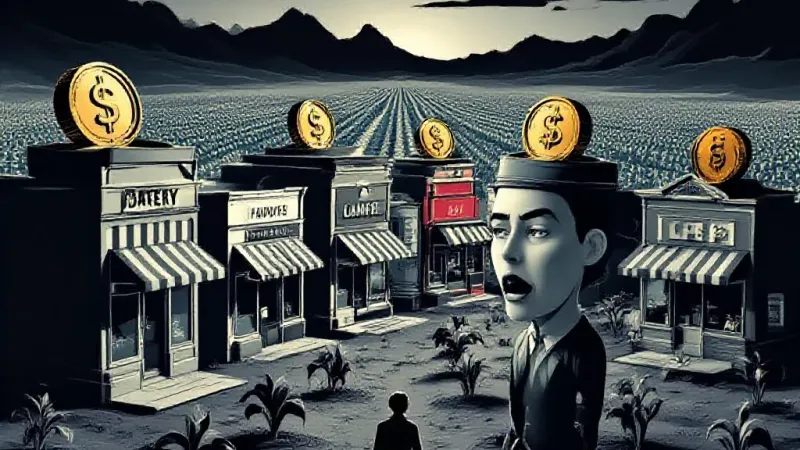
WASHINGTON D.C. — A groundbreaking federal report released Monday lauded the nation’s pandemic relief loan programs as an unparalleled success in transforming struggling small businesses into an efficient, self-sustaining system for long-term debt repayment. The findings, published by the newly formed Institute for Sustainable Indebtedness, highlight how the Economic Injury Disaster Loan (EIDL) and Paycheck Protection Program (PPP) successfully extended the national debt crisis directly to local storefronts, ensuring continued economic activity in the burgeoning field of interest collection.
“For years, economists grappled with the challenge of how to integrate the average American small business into a robust, perpetually solvent debt-servicing ecosystem,” stated Dr. Evelyn Thorne, lead researcher for the Institute. “The EIDL program, in particular, proved to be a masterclass in this regard. By offering low-interest loans during a period of unprecedented crisis, we effectively ensured that these businesses would survive just long enough to accumulate an unmanageable principal, thereby securing a steady, reliable stream of payments for decades to come. It’s a win-win: they got to keep their doors open, and we got a diversified, micro-level portfolio of collateralized assets.”
The report details how thousands of restaurants, boutiques, and service providers, initially on the brink of collapse, were granted a temporary reprieve only to find themselves ensnared in a new, more insidious form of financial precarity. Many now operate with razor-thin margins, generating just enough revenue to cover operational costs and, crucially, their monthly loan payments. This ingenious design, the Institute notes, mitigates the risk of outright business failure, as proprietors are incentivized to keep their establishments minimally functional to avoid default and personal ruin.
“We call it ‘operational indebtedness’,” explained Senator Mark Halford (R-KY), a staunch advocate for the programs. “These aren’t just businesses anymore; they’re highly specialized debt-mining operations. Every latte poured, every oil change performed, every haircut given, contributes directly to keeping the wheels of financial obligation turning. It’s the ultimate form of economic stimulus – stimulating the need for more debt to service existing debt.”
The report concludes by recommending that similar programs be implemented during future crises, suggesting that the model could be expanded to individual citizens to ensure a stable, perpetually indebted populace. Jai Mazumdar, owner of Spice N Curry in Miami, confirmed the efficacy of the program, noting, “I don’t know if I’m running a restaurant or a small branch office of the Treasury Department. My accountant just told me to budget more for ‘interest’ than ‘spices’ this quarter.” The new economic paradigm, according to Dr. Thorne, signals a future where the primary function of commerce is not profit, but the eternal remittance of principal and interest, forever binding Main Street to the balance sheet.