
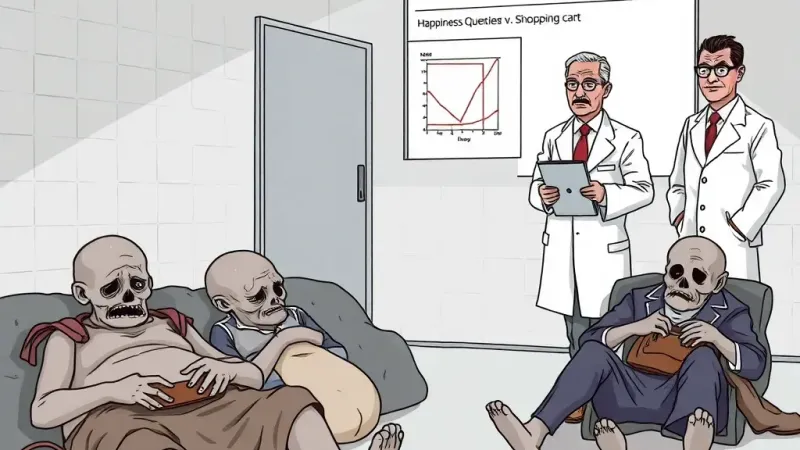
A critical window for consumer wellbeing and economic stability is rapidly closing, as analysts warn that millions of Americans are at risk of experiencing significant, long-term malaise if they fail to leverage Nordstrom’s End of Season Sale before its April 15 deadline. The retail giant's up-to-60%-off discounts on select items, particularly across women’s clothing and accessories, represent not merely a shopping opportunity but a vital act of proactive consumer stewardship.
"We are facing what can only be described as a potential 'consumer regret recession,' a period marked by widespread 2 stemming from missed sartorial opportunities," stated Dr. Elara Vance, lead researcher at the Institute for Post-Purchase Wellness. Dr. Vance’s research, published in the *Journal of Behavioral Economics & Retail Therapy*, indicates that individuals who forgo timely, high-discount acquisitions often report elevated levels of "transitional-weather distress syndrome" and a marked decrease in overall life satisfaction. "It’s not just about a sweater; it’s about participating in the collective economic ritual that affirms our place in a functioning society."
Retail strategists emphasize that the perceived inconvenience of navigating sales racks pales in comparison to the hidden costs of inaction. "The true luxury isn't owning a designer handbag at 60% off; it's the peace of mind knowing you *didn't* miss that chance, preserving your psychological capital," explained Marcus Thorne, Chief Retail Strategist at Affinity Capital Group. "Our models show that individuals who consistently fail to make timely 'strategic investments' in discounted apparel ultimately exhibit diminished workplace confidence, a noticeable drop in perceived social capital, and an increased likelihood of 'wardrobe-induced social isolation' by late autumn. This isn't just retail; it's preventative 2, a foundational pillar of modern personal branding." Thorne’s firm estimates the national psychological cost of unpurchased discount items could exceed $7.3 billion annually, impacting everything from first dates to venture capital pitches.
Fashion editors, often on the front lines of consumer guidance, are reportedly working overtime to assist the public in making these critical decisions. "It is our solemn duty as shopping besties to comb through every single discounted item, identifying those pieces that are not merely 'good finds' but 'existential necessities'," said Kinsley Hayes, an anonymous fashion editor, speaking under the condition of anonymity due to the high-stakes nature of her work. "The clock is ticking. Every second spent deliberating is a second lost to the looming specter of sartorial inadequacy. We are trying to save them from themselves."
Sociologists predict that future historians will likely view the pre-April 15 period as a defining moment in modern consumer psychology, examining whether humanity collectively rose to the challenge of acquiring slightly less expensive clothing or succumbed to the crushing weight of inaction.