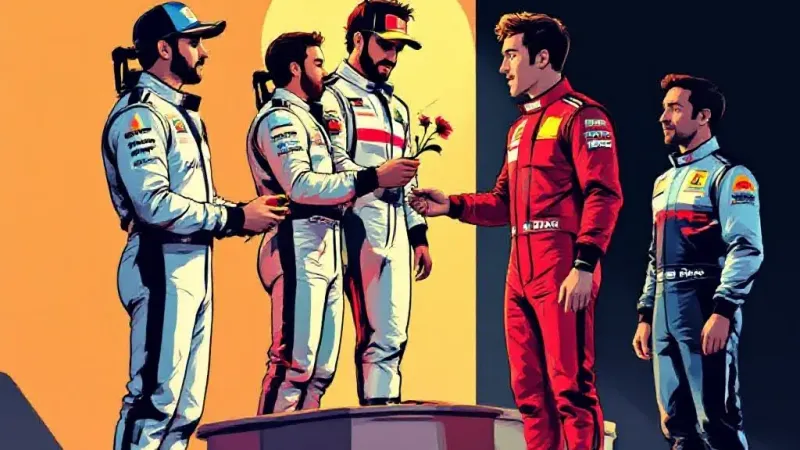
BARCELONA — Formula 1 fans and sports pundits alike are reeling this week after Mercedes prodigy Kimi Antonelli and reigning world champion Max Verstappen reportedly demonstrated basic human courtesy towards rival Lewis Hamilton following his landmark Ferrari victory in Barcelona. The "class act" behavior, which involved Antonelli offering a congratulatory pat on the back and Verstappen a perfunctory nod, has sent shockwaves through a global fanbase accustomed to what analysts now describe as "a state of mild, competitive indifference."
"This is truly unprecedented," stated Dr. Amelia Vance, lead researcher at the newly formed Institute for Minimal Inter-Team Decorum. "For decades, we’ve observed F1 drivers operating under the deeply ingrained belief that acknowledging an opponent's success might physically extract their own vital essence. Antonelli and Verstappen's actions challenge this paradigm, suggesting a future where rival drivers might, dare I say, briefly make eye contact without a full-blown existential crisis." Dr. Vance's team is now seeking emergency funding to study if this "empathy contagion" can be contained or if it will spread to other notoriously hostile competitive environments, like professional chess.
The incident has prompted calls for a reassessment of F1's "Drivers' Code of Conduct," which currently mandates a minimum of two scowls and one dismissive hand gesture per rival per season. "We always assumed the peak of sportsmanship was merely not crashing into each other on purpose," explained longtime fan Brenda Pith. "To witness such raw, unadulterated decency... it's like seeing a unicorn make a tax payment. My entire perception of competitive sports has been shattered. I haven't cried this much since my last car payment."
F1 management is reportedly scrambling to update fan engagement protocols, with speculation that future post-race celebrations might include mandatory group hugs and a shared, organic kombucha toast. Early proposals include a new "Golden Handshake Award" for drivers who successfully complete an interaction without resorting to passive-aggressive social media posts or subtle tire deflations. The league hopes these new measures will prevent any further outbreaks of "unexpected pleasantness." The league stressed that drivers will still be allowed to despise each other internally, provided it doesn't manifest as overt acknowledgment.