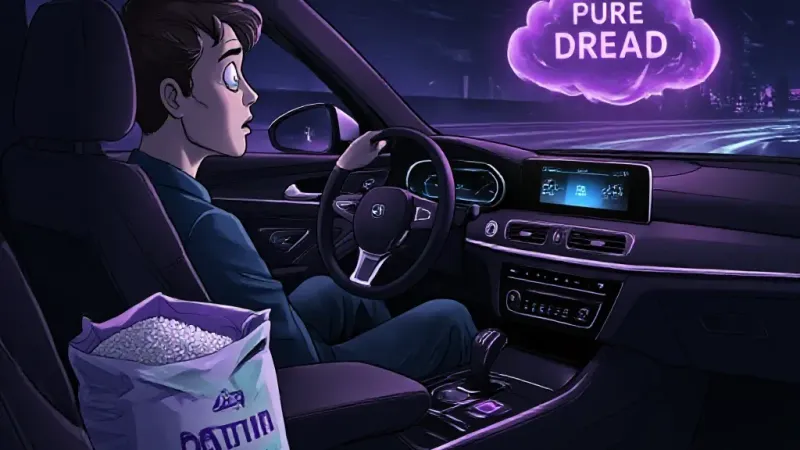
Every November, lifestyle publications feel the urgent need to publish survival guides for people driving fifteen minutes to pick up a prescription at CVS. These guides operate on the assumption that the moment water drops below thirty-two degrees, local asphalt transforms into the Antarctic shelf and your economy sedan becomes a doomed Arctic vessel captained by an absolute fool.
Take the classic recommendation to pack a bag of cat litter. This is not for a pet. This is for you to scatter humiliatingly beneath your front tires while a teenager in a lifted pickup truck watches you weep into the slush. The clay granules are less about friction and more about offering the universe a visible sign of your complete surrender. Alongside the absorbents, experts advise carrying a heavy-duty steel shovel. Not a small garden trowel, but an industrial earth-moving implement designed for heavy excavation, perfectly sized to fit in the trunk of a Corolla right next to your empty gym bag.
Then there is the food and water requirement. Winter road trip articles always suggest non-perishable snacks and bottled water. They frame this as nutritional preparation, but it is actually a psychological baseline for your final days. A box of saltines and three lukewarm bottles of water will sustain you through the harrowing forty-minute delay caused by a jackknifed semi on the interstate, giving you just enough energy to stare blankly at your steering wheel and regret every major life choice that led you to live in a climate where the sky occasionally drops solid death upon your head.
We must also discuss the mandatory wool blankets and extra layers. We are told to dress in heavy fleece and wool, as though we are attempting to summit Everest rather than sitting in traffic on the bypass with the seat heater cranked to maximum. The blankets serve a dual purpose: keeping you warm while you wait for the tow truck, and serving as a makeshift shroud when you finally succumb to hypothermia four blocks away from your local coffee shop. The physical sensation of wearing three layers of thermal underwear inside a car with a broken blower motor is the closest most modern professionals will ever get to experiencing genuine medieval hardship.
Do not forget the emergency phone charger and flashlight. In the event that your car slides off the road into a deep ditch, the flashlight allows search and rescue teams to locate your frozen shell with pinpoint accuracy, ensuring your family does not have to endure weeks of wondering whether you simply abandoned them to start a new life in Ohio. The phone charger is equally vital, ensuring that your final moments on this earth are spent watching your battery percentage tick down from four percent while you wait on hold with roadside assistance, listening to an automated voice thank you for your patience in a cheerful tone that makes you want to drive head-first into an oncoming snowplow.
Reflective warning gear is another staple of the packing list, ensuring that when you inevitably spin out into a snowbank, you do so while looking like a very enthusiastic construction cone. It is a brilliant psychological tool. Other drivers will not slow down to help you; they will simply admire your commitment to high-visibility textiles as they fishtail past your driver-side door at sixty miles per hour.
Ultimately, preparing for winter weather is about embracing the reality that modern infrastructure is a thin, polite fiction stretched across a frozen void. So pack your thermal blankets, your emergency flares, and your quiet acceptance of mortality, and remember to use your blinker before sliding into the abyss.