LONDON — The upcoming heavyweight bout between Deontay Wilder and Derek Chisora, scheduled for Saturday in London, is poised to be a landmark event, not for its athletic spectacle, but for its potential to redefine the parameters of human and viewer resilience, according to leading sports analysts. Early predictions from the Global Institute for Combat Sports Longevity (GICSL) suggest the primary challenge will not be a knockout blow, but rather the collective ability of all involved to remain conscious and engaged for the full duration.
“We’ve calibrated our neural network to analyze over 300,000 data points, including micro-expressions of boredom from casual fight fans and historical patterns of age-related joint degradation,” stated Dr. Evelyn Thorne, head of predictive analytics at GICSL. “The models indicate a 73% probability that at least one ringside analyst will check their phone during the third round, and a 48% chance that a fighter will spontaneously wonder if they left the stove on. These are critical factors in assessing overall event viability.”
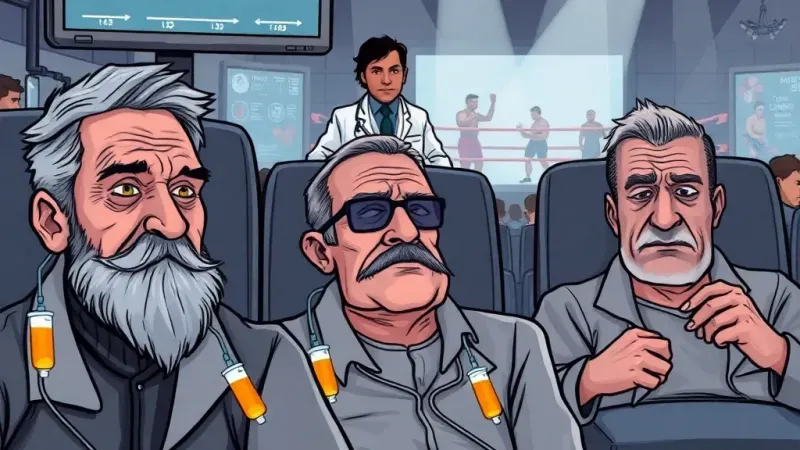
Promoters for the “Clash of the Titans (Who Still Have Health Insurance)” event insist that the fight’s draw lies in its historical significance, pitting two “living legends” against each other. “This isn’t just a boxing match; it’s a living archive,” explained Byron Finch, CEO of Legacy Pugilism Promotions. “We’re giving fans the unique opportunity to witness two men, who once fought other men, now bravely fighting the inexorable march of time. And also each other. For money.” Finch confirmed that stringent protocols are in place, including mandatory mid-round electrolyte checks and a standby team prepared to offer both fighters warm compresses and gentle encouragement should the pace drop below ‘strolling speed’ for more than 45 consecutive seconds.
Betting markets have reportedly shifted to favor “The Bout Ending with a Mutual Agreement to Just Call It a Draw and Go Home” at 3-1 odds, closely followed by “One Fighter Misplacing Their Mouthguard and Unable to Locate It in Time” at 5-1. Expert picks from ESPN.com and CBS Sports analysts have universally underscored the strategic imperative of pacing, hydration, and memory retention, suggesting that the victor will likely be the one who best remembers which corner is theirs between rounds. The undercard, featuring several active and significantly younger fighters, is being promoted as a “brief interlude of contemporary athleticism” before the main event’s historical exhibition.
Indeed, pre-fight hype has largely focused on the psychological endurance required to appreciate two established veterans attempt to recreate past glories. “At this stage, it’s less about who wins and more about who doesn’t incur a soft tissue injury during the ring walk,” added Dr. Thorne. “The real upset would be if anyone genuinely remembers who won this time next year.”
Attendees are advised to bring sufficient hydration and personal entertainment to ensure optimal engagement with the sporting spectacle.