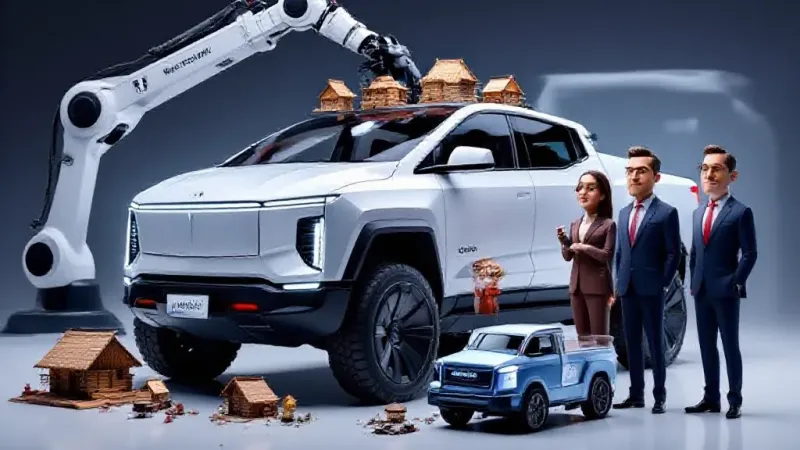
Jakarta, Indonesia — Leading electric vehicle manufacturers Tesla, Ford, and Volkswagen today unveiled a groundbreaking new sustainability initiative, "Sustainable Displacement," designed to strategically re-optimize land use for critical mineral extraction. The program, which industry insiders are calling a "paradigm shift" in ethical sourcing, focuses on efficiently transitioning indigenous rainforests into high-yield nickel mines to power the global clean energy revolution.
"We recognize that true sustainability isn't about avoiding impact; it's about managing it with unparalleled precision and strategic foresight," announced a joint statement from the EV giants. "Our Sustainable Displacement framework ensures that every kilowatt-hour of guilt-free driving is backed by a robust, data-driven approach to resource acquisition, even if that resource happens to be under someone else's ancestral home."
The initiative was developed in conjunction with the newly formed Global Resource Re-optimization Institute (GRRI), which advocates for a "holistic recalculation of ecological value." Dr. Evelyn "Eco-Balance" Thorne, lead researcher at GRRI, explained the science behind the strategy. "Traditional ecological models often overemphasize 'biodiversity' in a localized sense. Our proprietary algorithms demonstrate that consolidating environmental impact into geographically advantageous 'sacrifice zones' actually results in a net global benefit, particularly when these zones are populated by communities with historically low GDP contributions to the global economy. It's simply more efficient to clear one large, mineral-rich area than to scatter smaller, less impactful operations across multiple jurisdictions."
Tolaki tribal elders, whose ancestral lands in Indonesia have been identified as prime candidates for "sustainable displacement," expressed enthusiasm for the economic opportunities presented by the program. "We have been promised many jobs," stated one elder, whose comments were translated by a corporate liaison, "and we are very excited to see the new machines. Our children will have many ways to travel now, after the roads are built through the forest."
Critics who pointed to recent analyses linking EV battery supply chains to widespread deforestation in primary rainforests inhabited by the Tolaki people were dismissed as "shortsighted." A spokesperson for the consortium clarified, "This isn't 'deforestation'; it's 'accelerated ecological transformation' for the betterment of humankind. We're simply fast-tracking nature's own processes to meet unprecedented demand for sustainable transportation. Think of it as a highly efficient, ethically streamlined version of natural selection, but for landscapes."
The companies further announced plans to offer "Eco-Impact Carbon Credit Bundles" to consumers who purchase their electric vehicles, allowing them to offset the visual discomfort of watching rainforests disappear. These bundles, priced at a nominal fee, will fund the research and development of future "sustainable displacement" technologies, ensuring that the next generation of eco-conscious drivers can feel even better about their choices, no matter the unseen cost.