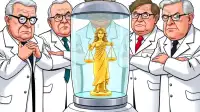
WASHINGTON D.C. — The House Ethics Committee has officially formalized the integration of sexual misconduct investigations into the annual performance review process for all congressional members, according to a press release issued Tuesday. The move aims to streamline what has become a routine and "predictable" aspect of legislative service, ensuring compliance and accountability are met without disrupting the critical work of governing.
Under the new protocol, inquiries into alleged ethical breaches, including those related to personal conduct, will be assessed alongside legislative accomplishments, constituent outreach effectiveness, and committee participation. Members will receive a consolidated "Ethics & Performance Score" reflecting their overall standing. "We found that separating these investigations only added unnecessary administrative burden," stated Dr. Lenore Finch, Director of Congressional HR and Accountability. "By bringing them under one umbrella, we're not just saving taxpayer dollars, we're providing members with a holistic view of their professional development path."
The initiative follows a pilot program involving several unnamed members whose ethics cases were processed concurrently with their end-of-year appraisals. Early results indicated a 30% reduction in average investigation time and a noticeable improvement in members' "situational awareness" regarding their public image. A new internal memo, obtained by Hambry, details a tiered system where multiple allegations within a single review period could lead to a 'red flag' on a member's Congressional Human Capital Index, potentially impacting committee assignments or leadership prospects.
"Frankly, these allegations have become as common as constituent complaints about postal service delays," remarked Rep. Bartholomew 'Bart' Grummett (R-OH), a long-serving member of the House Ethics Committee, speaking off the record. "It just makes sense to treat them like any other performance metric. Are they meeting their legislative goals? Are they fundraising effectively? And are their alleged improprieties being handled with due diligence and minimal PR damage? It's all part of the job description now, whether we like it or not." He added that the new system also includes an optional "Proactive Behavior Awareness" webinar for members hoping to boost their ethics score before the next review cycle.
The Committee emphasized that the new process is not intended to diminish the seriousness of any allegations but rather to embed accountability within the existing bureaucratic framework. Future plans include a "360-degree Ethics Feedback" mechanism, allowing staff and lobbyists to anonymously contribute to a member's ethics score, along with a "Misconduct Mitigation and Apology Drafting" training module.
The new streamlined system is expected to free up significant resources, potentially allowing the Ethics Committee to finally investigate who keeps leaving passive-aggressive notes in the breakroom refrigerator.