


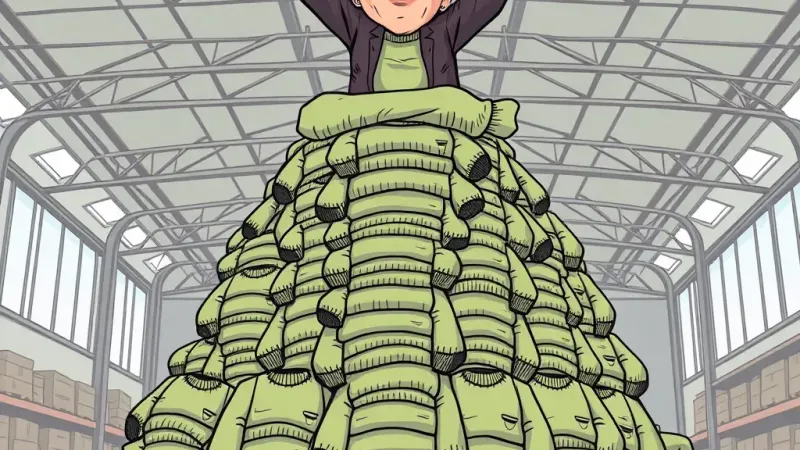
The question nagged with the persistence of a migraine as I watched her sip an oat milk flat white: Where did she get that organic hemp tunic, and why wasn't it currently in my shopping cart?
The fabric possessed that unmistakable drape of garments manufactured by people who care deeply about soil pH levels and very little about standard sizing. It screamed ethical consumption. It whispered slow fashion. More importantly, the cyber Monday-adjacent-Black-Friday clearance event had just dropped it from an intimidating one-hundred-forty dollars down to a morally defensible forty-two.
As a dedicated environmentalist whose commitment to the planet is strictly bound by seasonal markdown calendars, I knew this was no ordinary impulse purchase. This was an act of planetary stewardship. Every percentage point shaved off the retail price directly correlates to a reduction in greenhouse gas emissions. At seventy percent off, I wasn't just updating my capsule wardrobe; I was practically planting a sequoia tree with my credit card.
When I finally cornered her near the napkin dispenser to demand the URL, she looked at me with the weary eyes of someone who merely wanted to drink her caffeine in peace. But true sustainability waits for no one.
"It's organic cotton," she murmured, clutching her pastry bag like a hostage. "And they're doing a warehouse clear-out."
That was all the permission my conscience required. Within ninety seconds, my phone was out, my thumb was flying across the screen, and I was aggressively selecting three identical earth-toned midi dresses in sizes that required me to either lose ten pounds or embrace a lifestyle of severe postural restriction. The site promised that a portion of the proceeds would go toward planting trees in a zip code I cannot locate on a map. That makes the transaction a charitable donation, legally speaking. Or at least emotionally speaking, which in the wellness economy is roughly the same thing.
There is an exquisite, guilt-free euphoria that washes over you when you hoard textiles under the banner of ecological preservation. Fast fashion is a plague upon the earth—a disgusting, mechanized engine of late-stage capitalism designed to exploit the global poor for the fleeting dopamine hits of mindless shoppers. But slow fashion, when acquired during a massive fourth-quarter inventory liquidation blowout, is an entirely different ecosystem. When you buy seven sweaters because they cost less than a tank of gas, you are resisting the machine. You are voting with your wallet. You are telling corporate America that you demand ethical labor practices, provided those practices don't cost more than target brand fleece.
My cart overflowed with conscious choices. A bamboo wrap here. A recycled polyester cardigan that feels remarkably like a heavy-duty trash bag there. Each click of the 'Complete Order' button felt like a personal victory over climate change. Sure, fulfillment centers in Ohio are currently running twenty-four-hour shifts powered entirely by coal to pack my organic trousers into individual plastic mailers, but those trousers are biodegradable. Probably. The website had a very nice icon of a leaf next to the product description, and I trust icons implicitly.
As the package tracking updates roll in, showing my haul bouncing haphazardly through three different Midwestern distribution hubs, I feel a deep sense of alignment with the natural world. I am doing my part. I am reducing, reusing, and aggressively recycling my disposable income into a closet full of garments I will wear twice before donating them to a thrift store that will ultimately ship them to an open-air textile market in Ghana.
That is the true beauty of sustainable style. You look good, you feel morally superior, and you can rest easy knowing that Mother Earth is smiling down upon your three-for-one knitwear bundle.