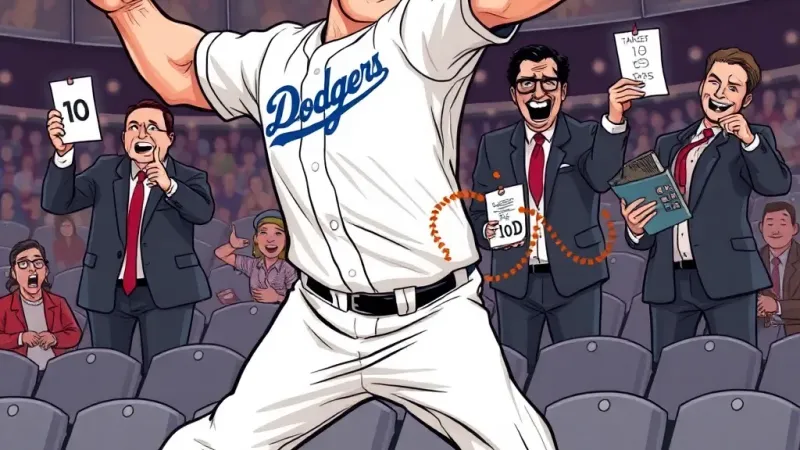
LOS ANGELES — The Los Angeles Dodgers today formally unveiled their groundbreaking "Optimal Unpredictability" pitching initiative, a radical shift in player acquisition focusing exclusively on hurlers renowned for their exceptional velocity and profound inability to consistently locate the strike zone. The organization announced it would be actively seeking pitchers with what it termed "unconventional command profiles," prioritizing pure stuff over any discernible accuracy.
This approach, sources close to the team indicate, is rooted in cutting-edge analytics suggesting that extreme wildness provides a strategic advantage by forcing hitters to prepare for pitches that could, theoretically, arrive anywhere from their shoelaces to the opposing dugout. "We’re not just looking for strikeouts anymore," stated General Manager Andrew Friedman via a pre-recorded holographic message broadcast from his undisclosed wellness retreat. "We're looking for psychological warfare. If a batter spends three pitches wondering if the ball will hit him, the umpire, or a fan in the third deck, that's three pitches they're not effectively competing. The market for reliable command has become saturated and overpriced; we've identified a significant inefficiency in 'controlled chaos' talent."
The new directive follows an internal study by the Dodgers’ Advanced Data Disruption Lab, which found a statistically significant correlation between a pitcher's propensity for throwing balls and an opposing batter's increased heart rate and general sense of unease. Dr. Evelyn Reed, head of the lab, elaborated, "Our data shows that a 150-MPH fastball thrown within the vicinity of the plate is moderately effective. A 100-MPH fastball that *might* be a strike, *might* be a wild pitch, or *might* trigger an emergency medical response is, frankly, priceless. We’ve found a direct link between a pitcher's walk rate and a hitter's average therapy bill, with a 0.73 R-squared value for pitches outside the batter's box, specifically between the chest and helmet level." She added that the Dodgers are also exploring biomechanical adaptations to encourage "spontaneous arm slot variations."
Critics note the potential for a league-leading number of walks, hit-by-pitches, and general on-field chaos. However, the Dodgers front office remains undeterred, viewing these as unavoidable — and perhaps even desirable — byproducts of their innovative strategy. "The cost of a few extra baserunners is negligible when you consider the existential dread we're instilling in opposing lineups," noted Dodgers President of Baseball Operations Stan Kasten, adjusting his custom-fitted blockchain-encrypted team cap. "Besides, we have the budget to sign a few extra relievers if our starters exit after 1.1 innings and 7 walks. It's merely a reallocation of resources from things like 'reliable starting pitching' to 'pitcher-induced psychological breakdown.' We believe the emotional toll on the opponent far outweighs the statistical blips on our side of the ledger." Kasten further clarified that the organization is actively developing AI-driven "damage control" algorithms to minimize walks to *only* one per batter.
The league, meanwhile, is reportedly exploring new rules regarding personal injury liability for batters facing what one unnamed executive called "weaponized inaccuracy."